Behind the curtain of immigration

Economists tend to favor relatively free trade in goods and the discipline is even more optimistic about the benefits of the free movement of people.  For example, below are some polls of elite economists done by the University of Chicago business school that demonstrate how economists overwhelmingly agree that immigration is good for American innovation, government deficits, and the real income of native-born Americans.

The first poll shows that all economists agreed that it weakened the US in technology when the US government reduced visas for skilled immigrants.

2020:   “Even if it is temporary, the ban on visas for skilled workers, including researchers, will weaken US leadership in STEM and R&D.”
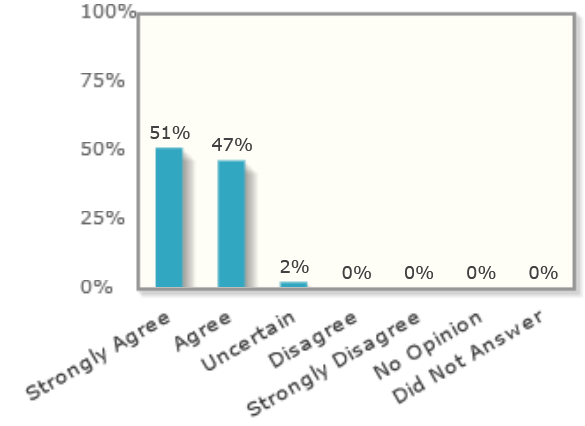
Only 2% of economists polled said that reduced immigration in 2018 would not hurt US innovation:

 “Over the past two years, all else equal, the appeal of the US as a destination for immigrants has changed in ways that will likely decrease innovation in the US economy.”

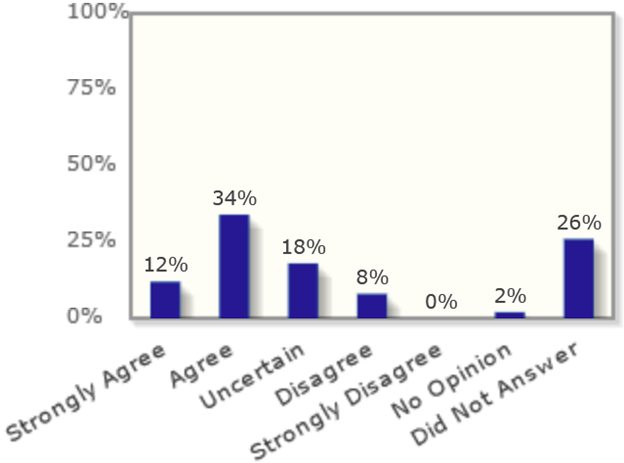
And only 8% of economists thought that immigrants to Europe would get more in welfare benefits than they paid in taxes.  And that is in Europe where welfare benefits are much more generous than the US and at a time when Europe was getting flooded by a refugee crisis who typically need more government help than the average US immigrant who was attracted by jobs.

2018:  “People who migrated to Europe between 2015 and 2018 are likely — over the next two decades — to contribute more in taxes paid than they receive in benefits and public services.”
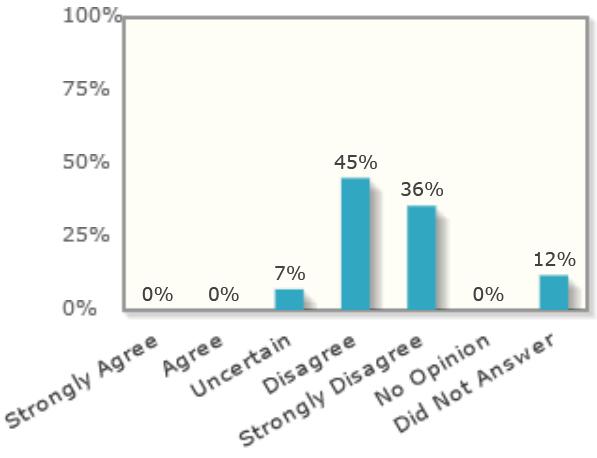
Zero percent of economists think that reducing high-skilled immigrants (who get an H-1B visa) would raise US tax revenues.

2017: “If the US significantly lowers the number of H-1B visas now, expected US tax revenues will rise materially over the next four years.”
The main potential economic danger of immigration is that immigration of low-skilled workers might possibly contribute to inequality in America by boosting the real living standards of the middle and upper-classes and suppressing the wages of low-skilled Americans.  Most research does not support this idea, but George Borjas (an immigrant himself) is one of the few prominent economist who really dislikes immigration.

Why A Wall is Political Theater

Although Borjas hates immigration, he does not believe a border wall does any good.  It is easy to see why.  Suppose you have a delicious nut tree, but squirrels have been coming from the forest on one side and they are eating the nuts, so you decide to build a fence around the tree, but you only put the fence around 38% of the border with the forest and a lot of that fence is only designed to stop vehicles, not walkers.  How effective would that fence be?  Furthermore, the squirrels have ropes and ladders for climbing over the fence and most of the fence is in a place where it is hard for anyone to see, but hardly anyone bothers to bring a ladder because there are much easier ways to visit the tree.  For example, you invite millions of squirrels each year to enter through gates in the fence to visit the tree on tourist visas.  Many of them never leave.

This silly story is just like America’s border wall.  Even Donald Trump has stopped talking about the wall which was central to his 2016 campaign when he promised hundreds of times to build a wall across the Mexico border and make Mexico pay for it.  In the end he added just 80 miles of new wall (and just 47 miles of primary wall plus 33 miles of secondary wall built to reinforce the existing primary barrier).  It is easy to see how that won’t make much difference on a border that is nearly 2000 miles long.  He spent most of the money improving the existing barrier that previous administrations had already built because that was easier than trying to build a wall on new territory.  Despite the record expenditures on the wall it didn’t stop a surge of migrants that began during Trump’s last year in office and reached a record peak during the Biden administration,.

Deportations are also mostly Political Theater

Who arrested more immigrants, Trump or Biden?  Most would be surprised to learn that Biden arrested FAR more immigrants than Trump.  This graph, by the conservative Cato Institute, shows the total and even includes the refugees who were forced to remain in Mexico while they awaited their asylum hearings which was much bigger under Trump than Biden.
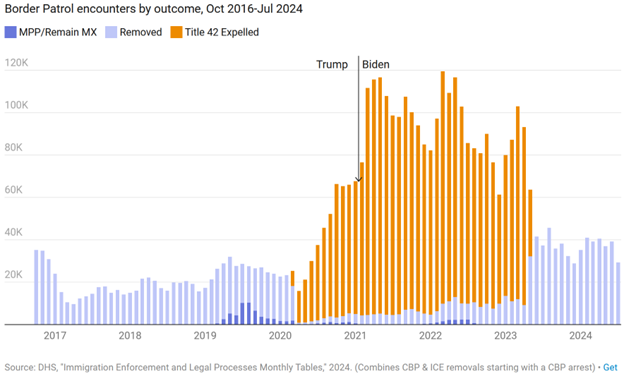
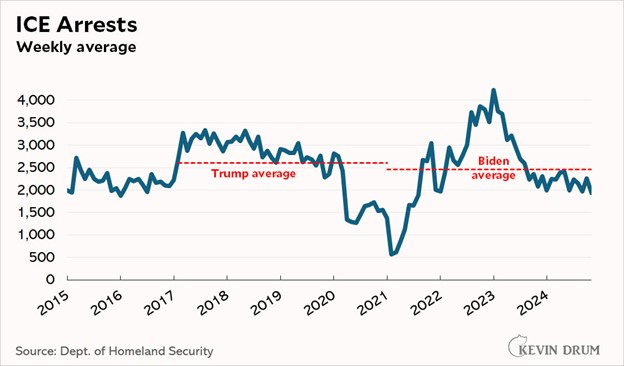
There are basically two places immigrants get arrested, at the border by the Border Patrol and within our communities by Immigration and Customs Enforcement (ICE “raids”).  There is very little difference in the number of ICE raids during Trump and Biden:
Deporting people isn’t as easy as you might think.  The American Immigration Council estimates that it costs the government an average of $88,000 for each deportation.  Most of that cost is for keeping each immigrant in jail while the government negotiates for their release.  Jail is VERY expensive accommodation, and it can sometimes take years to get another country to accept a forced repatriation.

Who jailed more immigrants, Trump or Biden?  You guessed it!
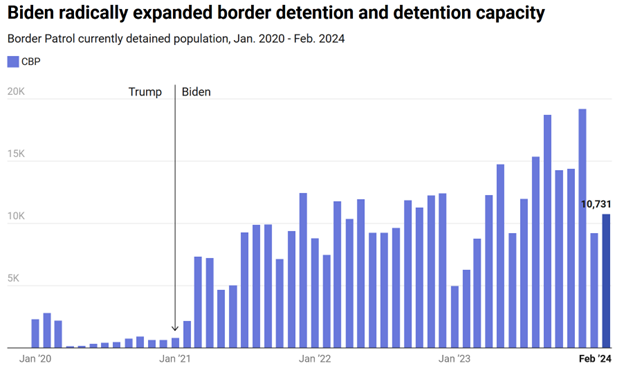
Most people THINK that Trump deported a lot more foreigners, but that is mainly because Trump is much more theatrical about immigration than Biden.  When we combine the data, Biden actually deported, expelled or detained 73% more immigrants than Trump.

What causes illegal immigration to America?

There are three main causes:  jobs, jobs and jobs.  This is the PULL that brings immigrants.  Some analysts also correctly point out that there are PUSH factors like the political repression and economic collapse that has pushed 20% of Venezuelans to leave their country or the Syrian war that displaced half of that country, but push factors only explain why people leave a place and there are always push factors somewhere in the world.  Push factors have very little power to explain why those migrants go to America rather than Guatemala and why few people wanted to go to America in 2010 whereas many came in 2021.  By far the main driver of immigration to America is jobs.
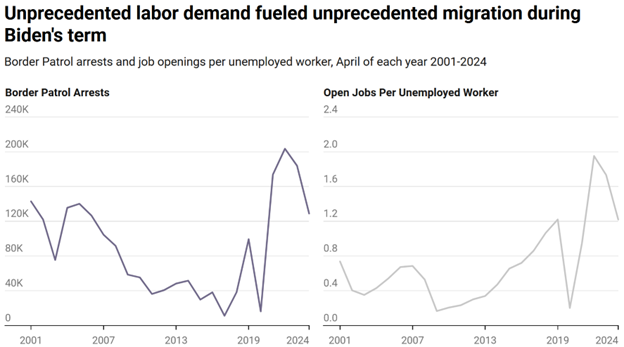
When labor markets are weak, like in 2007-2012, there are fewer immigrants.  In fact, about a net of a million illegal immigrants self-deported and left the country during this time.  The biggest reason for the migrant boom from 2021-24 was the exceptionally high number of job openings in America.

Why most immigration policy is political theater

The Wall Street Journal recently reported that Ron DeSantis has passed laws that radically crack down on immigration, but despite the fanfare, “the law hasn’t resulted in huge disruptions to the state’s labor market, as some predicted.”  This is because, “Certain provisions were watered down before the bill passed or in its implementation, and the state has done little to enforce the law.”

This is typical immigration policy in the US.  Like Trump’s wall, it gets a lot of press, but it doesn’t actually do much to change the labor market that is dependent upon undocumented workers.  This is the sweet spot for the powerful business owners who dominate our political system.  They get to keep most of their undocumented workers AND those workers become more afraid and docile.  Businesses love immigration because they like to have more choices for hiring workers and the business lobby is the most powerful economic force in Washington.  They are happy to play along with political theater that wastes a lot of tax dollars as long as it just makes immigrant workers more docile.  They will block policies that actually cause them significant problems hiring immigrants.

If politicians were serious about immigration, they could eliminate most undocumented immigrants at zero cost to taxpayers!

It costs somewhere around $80,000 to deport each undocumented worker, many of whom make less than $20,000/year, but if we got rid of their jobs, they would be forced to leave.  It would be a LOT cheaper to get rid of their jobs than to deport the workers.  All we would have to do is fine the employers who hire them.  These fines would generate income for the program so it could pay for itself!  There would be no expensive jails for undocumented immigrants and the government wouldn’t have to pay for expensive flights.  Most would voluntarily leave to look for better opportunities somewhere else.

Imagine if when the police raided a drug den, they just rounded up the addicts and left the drug dealers free to continue their business.  That is basically how deportation works.  Almost every time ICE raids a workplace and rounds up workers for deportation, it leaves the job dealer Scott-free to hire more undocumented workers again the next day.  This is why deportation is political theater that doesn’t work.  It doesn’t do anything about the root cause of immigration.  If it is illegal for a foreigner to work in American then it should be illegal for an American to hire a foreigner, but in practice, fewer illegal job dealers get prosecuted than Americans who get struck by lightning.  For American employers of illegal workers, the risk of dealing with ICE is just a small, manageable cost of doing business.

We already have an effective program for employers to check the immigration status of workers, but it just isn’t enforced.  Here is Kevin Drum commenting on a LA Times article:

Don Lee at the LA Times writes all about it:

Even though E-Verify is free for employers, with more than 98% of those checked being confirmed as work-authorized instantly or within 24 hours, the program is significantly underused.

….In its earlier years E-Verify was riddled with errors, but today is seen as highly reliable. Of the 10 million employees checked through E-Verify in the first quarter of this year, fewer than 2% were flagged as mismatches. Of those, about 18,000 employees, or only 0.2% of the total, were later confirmed as work-authorized.

In other words, it’s 98% accurate within 24 hours and 99.8% accurate overall. And it’s easy to use. Despite this, few businesses use it and it’s not mandatory. Why?

Sen. Mitt Romney (R-Utah), with Republican colleagues including Ohio Sen. JD Vance, former President Trump’s running mate, in June introduced a bill to make E-Verify mandatory across the country. But similar efforts in the past have repeatedly failed to win enough bipartisan support.

….In Washington, many Democrats have indicated they will support a national requirement only if it is part of an overall reform that includes legalization of undocumented immigrants currently in the U.S., which most Republicans oppose.

Republicans also face resistance from some employers and special interest groups, whether farming or construction or other service sector that relies on immigrant labor. For them, it’s a bottom-line issue.

The not-so-secret truth is that nobody really wants to get rid of undocumented workers:

One key reason: There are simply not enough “legal” workers to fill all the jobs a healthy, growing U.S. economy generates. And that’s especially so in low-wage industries.

Employers say that requiring E-Verify — without other overhauls to the immigration system, including easier ways to bring in workers — would be devastating.

I think you would see a general overall collapse in California agriculture and food prices going through the roof if we didn’t have them do the work,” said Don Cameron, general manager at Terranova Ranch, which produces a variety of crops on 9,000 acres in Fresno County.

….It’s not simply a matter of not having enough workers to do the hard, often dead-end and low-wage jobs that most U.S. citizens don’t want to do. It’s the shortage of workers overall, experts say.

For decades, birth rates in the U.S. have been declining, as they have in most of the economically developed world. Today, the birth rate among American women of childbearing age has dropped below the level needed to meet the country’s replacement rate. California’s birth rate is at its lowest in a century. If the economy is to grow and prosper, as almost all Americans say they want it to, additional workers must come from somewhere else.

Getting rid of immigrants wouldn’t solve any of America’s ECONOMIC problems

There is overwhelming evidence that immigrants don’t reduce job opportunities for native-born Americans.  If anything, they help the average American.  Of course, even though immigrants help most Americans doesn’t mean that there aren’t a minority of Americans who really wanted to pick strawberries and who end up doing something else instead because immigrants pick the berries for a lower wage.

Immigrants do not cost taxpayers.  Overall, like native-born Americans, they pay as much in taxes as they get in government services.  Actually, undocumented immigrants tend to be a net positive because they aren’t eligible for most services and they still have to pay taxes.  A 2016 report by the National Academy of Sciences found that immigration’s fiscal impact is positive for everyone except the very least-educated immigrants.  Again, there are exceptions to the general rule (particularly the least educated!), but if we throw them all out, we’ll not end up any richer.

Immigrants have a lower propensity to commit crimes than native-born Americans.  Of course, this statistic is excluding the crime of living in America and working for pay, but that is a victimless crime!  For example a 2020 paper found that:

Relative to undocumented immigrants, US-born citizens are over 2 times more likely to be arrested for violent crimes, 2.5 times more likely to be arrested for drug crimes, and over 4 times more likely to be arrested for property crimes.

And the Marshall Project found that places with more undocumented immigrants tend to have slightly less crime.

Although immigration is good for economic statistics, it also affects American culture.

America has the right to control our borders and decide who can immigrate here and who cannot.  That is what sovereignty means.  Even though immigrants help the US economy, they also affect our culture and it is certainly legitimate to decide to do something costly to preserve cultural values.  Oddly, however, it would seem like liberals would have the most to fear from immigrant cultural values because most immigrants come to America with more conservative social values than the median American.  They would be natural Republican supporters if Republicans embraced immigrants like they did in the past.  In fact, Ronald Reagan was pro-immigration and signed the last big amnesty bill when he was president.  California was a Republican state under Reagan and remained so until the Republican Party sponsored an anti-immigrant program which turned Hispanics against the party thereby turning the state blue.  Of course, this is changing as most immigrants since 2010 have not been Hispanics. This perhaps helps explain why Hispanics in America are starting to turn against immigration too, just like previous waves of immigrants who do not like the strange cultures of newer immigrants.

American employers are paying them to come

The rise of non-Hispanic immigration also helps explain why illegal immigration from Canada has been surging.  Immigrants to the US first try get a tourist visa to the US which is the easiest way to get in.  In the past, between 1/3 and 1/2 of America’s unauthorized migrant population entered legally.  If that fails, non-Hispanic migrants prefer to try Canada next because it is ridiculously easy to cross from Canada and only if that fails do they resort to first entering Mexico or farther south and traveling overland.  The changing origins of American immigrants also explains why more are hiring boats to bring them in.

There are numerous businesses that shuttle unauthorized immigrants across Central America and help them cross the US-Mexico border.  Other businesses smuggle migrants in by boat and if America puts up a longer wall, these entrepreneurs will find the weakest parts of the border and continue to smuggle immigrants in as long as American employers are demanding immigrant workers.  As long as employers are free to employ unauthorized immigrants, there is just too much money to be made to stop this trade.

As long as American employers are paying them to come, they will find a way to come.
Tagged with: ,
Posted in Medianism

Minimum wage problems?

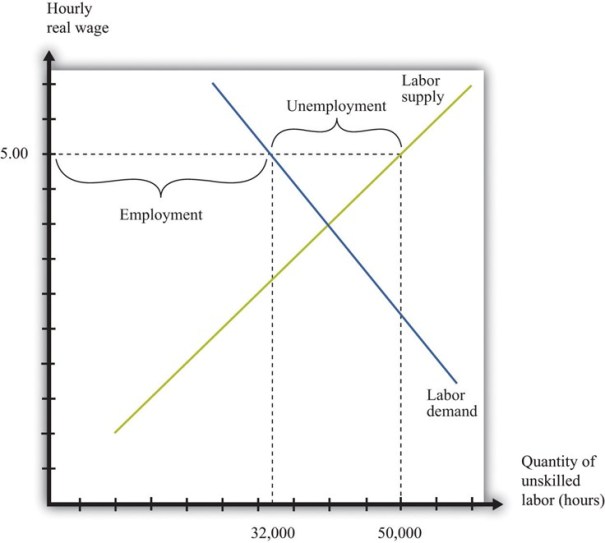
Until the 1990s, most economists believed that the minimum wage was a major cause of unemployment because that is what the canonical supply and demand model predicts.

If wages rise, more people will want to work (increasing the quantity of labor that is supplied) but employers would want to buy less labor (reducing the quantity of labor demanded). The gap between the supply and demand is the quantity of unemployed workers. But surprisingly, that doesn’t seem to happen in most cases! There are a couple theories for why this is the case, but the most common one is that employers have more market power than employees and artificially hold down wages. The minimum wage, according to this theory, simply raises the wage back closer to what the competitive equilibrium would be. A related theory is that the minimum wage could mostly cause a transfer of some monopoly profits from landowners to go to workers.

Steven E. Landsburg is a libertarian who dislikes government actions like the minimum wage, but even he agrees that the minimum wage does not significantly increase unemployment.

…here’s what most labor economists believe: The minimum wage kills very few jobs, and the jobs it kills were lousy jobs anyway. It is almost impossible to maintain the old argument that minimum wages are bad for minimum-wage workers.

In fact, the minimum wage is very good for unskilled workers. It transfers income to them. And therein lies the right argument against the minimum wage.

Ordinarily, when we decide to transfer income to some group or another—whether it be the working poor, the unemployed, the victims of a flood, or the stockholders of American Airlines—we pay for the transfer out of general tax revenue. That has two advantages: It spreads the burden across all taxpayers, and it makes politicians accountable for their actions. It’s easy to look up exactly how much the government gave American, and it’s easy to look up exactly which senators voted for it.

By contrast, the minimum wage places the entire burden on one small group: the employers of low-wage workers and, to some extent, their customers. Suppose you’re a small entrepreneur with, say, 10 full-time minimum-wage workers. Then a 50 cent increase in the minimum wage is going to cost you about$10,000 a year. That’s no different from a $10,000 tax increase. But the politicians who imposed the burden get to claim they never raised anybody’s taxes.

If you want to transfer income to the working poor, there are fairer and more honest ways to do it. The Earned Income Tax Credit, for example, accomplishes pretty much the same goals as the minimum wage but without concentrating the burden on a tiny minority. For that matter, the EITC also does a better job of helping the people you’d really want to help, as opposed to, say, middle-class teenagers working summer jobs. It’s pretty hard to argue that a minimum-wage increase beats an EITC increase by any criterion.

Brad Delong disagrees about the burden of minimum wage laws:

I–and almost everybody else I’ve talked to–think this is dead wrong: the incidence of the minimum wage ‘tax’ falls almost entirely upon the customers of firms that employ minimum-wage workers, and that’s pretty much all of us. It’s not as though the owners and managers of firms that employ minimum-wage workers have no other options. So I believe Landsburg is wrong: the burden of the minimum wage is broadly distributed across all taxpayers…

Now I like the EITC… But the EITC is a program that uses the IRS to write lots of relatively small checks to tens of millions of relatively poor people who satisfy picky eligibility rules. This is not the IRS’s comparative advantage… The EITC is a good program, but it a costly program to administer, and it is administered imperfectly to say the least.

The minimum wage, on the other hand, is nearly self-enforcing: its administrative costs are nearly nil, for workers… have a very strong incentive to drop a dime on bosses who violate it. From a government-administrative and error-rate perspective, it’s a very cost-effective program.

The right solution, of course, is balance: use the minimum wage as one part of your program of boosting the incomes of the working poor, and use the EITC as the other part. try not to push either one to the point where its drawbacks (disemployment on the one hand, and administrative error on the other) grow large.

Another effect of the minimum wage is that it increases productivity of workers through the “efficiency wage” effect. Workers have lower turnover and get more training and employers invest in more equipment to make labor more efficient. When employers substitute robots for workers, one would think that that would produce unemployment, but instead, historically it has led to higher wages. This is another theory to help explain why the minimum wage doesn’t cause significant unemployment. As Matthew Yglesias says:

one major line of criticism from outlets like the Wall Street Journal editorial page and Forbes’s Tim Worstall is that big increases in [minimum wages] only leads to job loss via automation. Both critics point to initiatives at McDonald’s and Wendy’s to automate more of the service process, and warn that robots, rather than workers, will be the real winners if liberals succeed in boosting minimum pay.

This is doubly wrong… there’s no reason to think this would be a bad scenario.

If minimum wage hikes really do spur the creation and adoption of high-quality new equipment to automate elements of, say, the food service industry, then that would be a very positive outcome that implies minimum wage hikes are a great idea. Productivity-enhancing technology, after all, is a crucial pillar of social and economic progress. The problem in recent years is that we haven’t had nearly enough of it

Right now the retirement age is rising from 65 to 67, and most people think it will have to go up to 70. If robots can do a lot of the work instead, we could put it back down to 65 or even to 62 while still growing the economy. We could give more financial support to college students so fewer of them are doing part-time food service work. We could give new parents more paid leave time and mandate four weeks of paid vacation for everyone.

It would be great!

Worry that the robots won’t take the jobs

The scenario to worry about with minimum wage hikes is that no technological solution will emerge. Restaurant operations will remain about the same, but employing people to work in them will get more expensive.

In pricey, crowded cities… Operating a restaurant will become less lucrative, which… will mean lower returns for landlords, which is a small price to pay for better living standards for low-wage workers.

But in less crowded, less expensive locations…, it will just mean fewer restaurants open and those that do open will keep shorter hours [and unemployment rates could rise].

This is the biggest question about minimum wage rules

Whether a legislative push for high pay can actually spur the development and deployment of new productivity-enhancing technology is really the big unknown about the minimum wage. The economics literature has an enormous amount to say about how to efficiently distribute a fixed stock of resources, but has not really succeeded in shedding much light on where innovation comes from or what policies support it.

Existing studies of the labor market impact of minimum wage hikes generally find very small effects on employment based on very small wage increases. The question they ask is essentially whether a small hike in the wage floor introduces a small inefficiency into the labor market or whether it corrects for an existing inefficiency that… employers [have some monopsony] pricing power over workers.

This is an interesting question, but the wage-innovation question is a much more difficult — and yet important — one. The prevailing conventional wisdom in Western policy circles over the past generation has been that innovation is something that just happens. The government can help it along by providing an educated workforce and funding some basic R&D, but certainly can’t just summon productivity-enhancing technology into existence by waving a magic minimum wage wand. But that’s really just an assumption, not a proven proposition.

The fact that so many minimum wage skeptics think it’s intuitively wrong is telling and interesting. A cheap labor economy, after all, doesn’t offer as many incentives for companies to identify and promote managers who are skilled at finding, developing, and deploying labor-saving technology. Perhaps if [higher minimum wage laws force] companies to eschew cheap labor, they will respond by innovating and reducing their need for workers.

One of the theories for why technological innovation took off in northern Europe and caused the industrial revolution was the fact that wages in northern Europe were some of the highest in the world. That gave businesses a large incentive to invent labor-saving machines. When numerous businesses invented new technologies, the industrial revolution was born. That didn’t happen in China or India and labor despite their head start in technology and one theory to explain Europe’s edge was the fact that wages were so low in China that it was easier to just hire more cheap labor to get work done rather than hire expensive engineers to build expensive machinery that would replace labor. A minimum wage law could have a similar effect and that might be why we cannot see evidence that they have had much effect on unemployment.

Posted in Labor

Keynesian stimuli and the Covid recession.

Updated January 8, 2024

Business cycles are the fluctuations in national income and unemployment.  Before the Great Depression, economists had been debating whether or not the government could use monetary and fiscal policy to fight recessions.  The mainstream classical school of economics did not have a consensus about why business cycles happened nor how governments could reduce recessions.  There were even some economists like Fredrich Hayek who believed that recessions were a healthy part of capitalism and should not be avoided, but rather that monetary policy should keep interest rates high to avoid periods of excessively high economic growth!

The Keynesian revolution in economics was inspired by the calamity of the Great Depression, but Keynes did not publish this General Theory until1936 and it took some time to become mainstream, so it was too late to influence the policies of the Great Depression.  The debate over Keynesianism created the  discipline of macroeconomics as a distinct specialty separate from other parts of economics.  Although the Keynesian revolution was too late to influence the policies of the Great Depression, it would have supported many of the fiscal and monetary stimulus programs of the FDR administration.

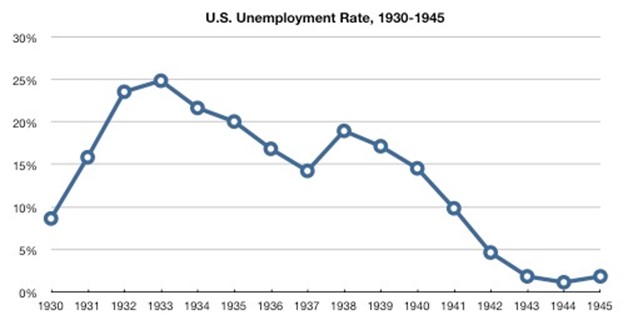
In fact, FDR was also influenced by classical economists who convinced him to slash government spending by 17 percent the year Keynes’ theory was published!  The US economy had been recovering rapidly when FDR was implementing fiscal and monetary stimulus from 1933-36, but it tipped back into recession in 1937 with FDR’s return to austerity.  FDR’s fiscal stimulus was actually fairly small as a percent of GDP and he cut it way too early:  Unemployment had not even dropped below 15% and the premature return to austerity prolonged the depressed economy.

Then WWII brought the biggest increase in government spending in US history in 1940.  That mammoth fiscal stimulus rapidly reduced unemployment and finally ended the Great Depression for good.

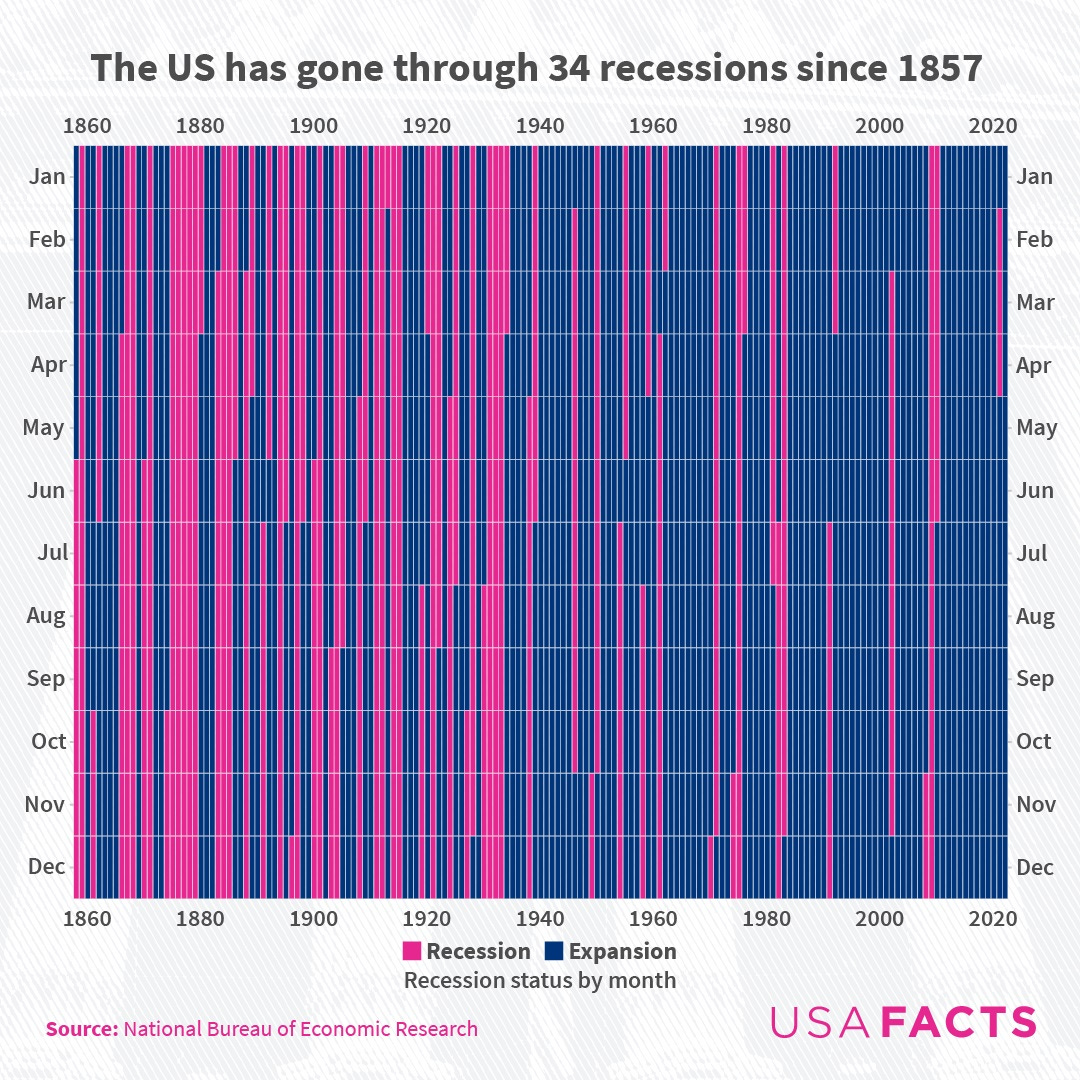
Over the following decades, the US government followed the monetarist prescription and focused on Keynesian monetary policy and the US never intentionally implemented a Keynesian fiscal stimulus until 2008.  But monetary became very active at constantly trying to fine tune the economy after leaving the gold standard and it worked!  Recessions became less frequent

Fiscal policy was never deliberately used for fighting a recession until 2008* partly because it was still remarkably controversial even in 2008, but for some reason, most critics of fiscal policy accepted the routine use of monetary policy to steer the economy.  One major exception was the proponents of returning to the gold standard.  Although about 98% of economists rejected them, they were a substantial percentage of the US population and some major politicians supported the idea.  The gold standard eliminates most of the tools of monetary policy because it forces the central bank to try to stabilize the value of gold to avoid excessive inflation and deflations produced by changes in the international supply and demand of gold. Stabilizing the throes of the market value of gold/money is an extremely challenging task which consumes nearly all of the efforts of monetary policy under a gold standard.  Many of the proponents of the gold standard were ideologically-motivated libertarians who dislike the politics of giving power to the government to set the interest rate and inflation rate.  The central planners at the Fed literally set the price of money and manipulate the unemployment rate!  They manipulate what share of our national income goes to workers versus how much goes to capital owners in the form of interest!  This would seem much more politically controversial than fiscal policy which is just deciding how much the government borrows from year to year.

Since the advent of bitcoin, many of the libertarians who used to support the gold standard have switched to dreaming about a cryptocurrency replacing the Fed, but this has been so impractical so far that the idea has not generated nearly as much support from mainstream politicians as the gold standard which was proposed by major presidential candidates, state governors, and senators until 2008 whereupon the invention of cryptocurrency in 2009 fragmented the allegiances of the people who want to end the Fed.

So the first Keynesian fiscal stimulus bill in US history was George W. Bush’s 2008 Economic Stimulus Act which sent $600 checks to most low and middle-income households. The Bush stimulus contributed $152B of stimulus and was followed up in 2009 by Obama’s ARRA stimulus which totaled $831B over ten years. About 1/3 of Obama’s stimulus was tax cuts and 2/3 spending. The Obama stimulus was extremely politically contentious and inspired a backlash by a vocal minority who believed Keynes was wrong.  They typically believed in some version of classical macroeconomics–that recessions are solely caused by changes in aggregate supply which cannot be improved by fiscal stimulus. There were many people who claimed that Obama’s stimulus would not work or that it would make the economy worse. On the other side of the debate, many Keynesian economists argued that it was far too small to fix the enormous economic problem and should have been at least double the size.

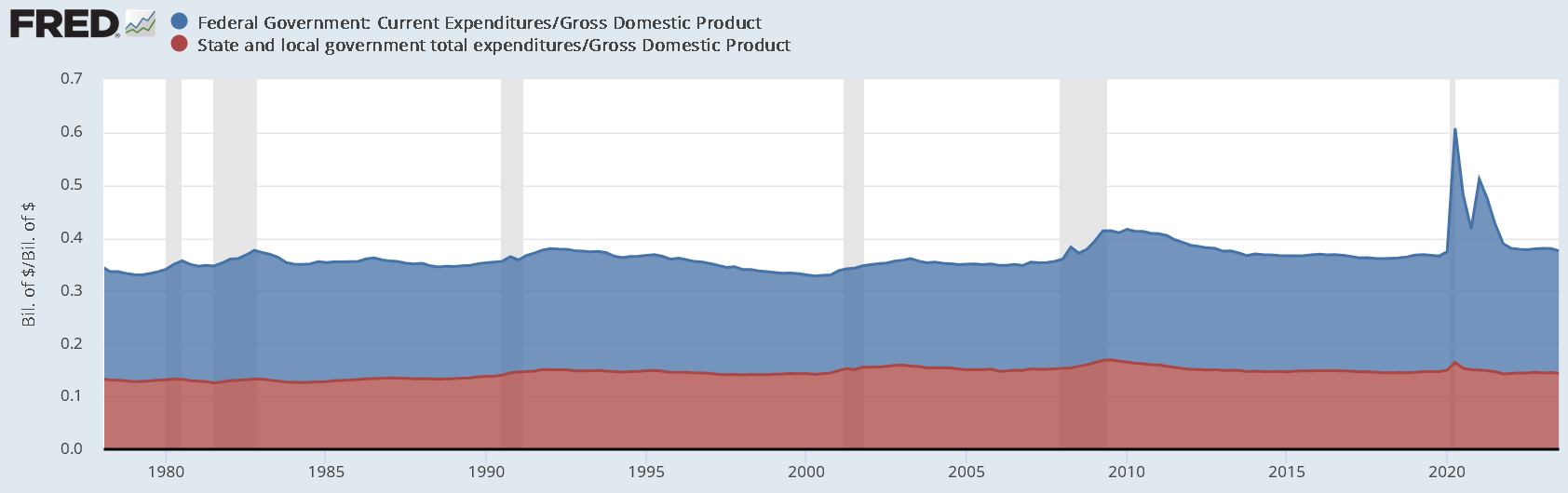
In fact, the Obama stimulus was extremely weak given all the other government spending that was declining.  It mostly just replaced cuts in other government spending because total government spending (including state + local + federal) only increased at about the same rate as in all prior recessions for the first two years of the stimulus, and then plummeted due to other cuts, many of which were implemented by state or local governments.

There is always some automatic fiscal stimulus in every recession because income tax revenues fall as incomes fall and welfare payments (mostly unemployment assistance) automatically increase as incomes fall so the government automatically increases deficit spending without changing policy.  But that is just accidental fiscal stimulus and not an intentional change to stimulate the economy.

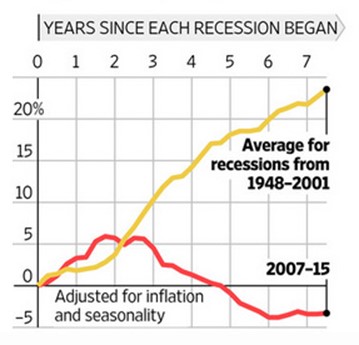
The graph below shows the increases in government spending during recessions which shows how much bigger the 2020 spending increase was than any other since WWII:

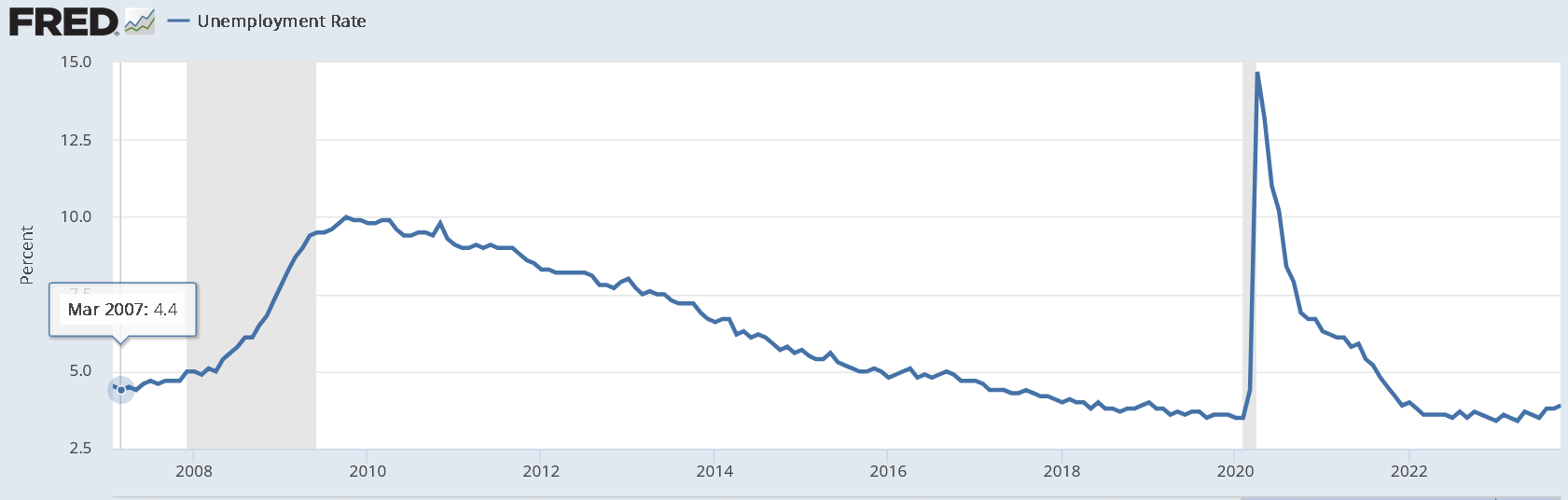
The fiscal austerity that began in 2010 was similar to FDR’s 1946 austerity.  Both were premature and contributed to a VERY slow recovery. In fact, unemployment did not return to its pre-recession low until 2017, an entire decade after the recession began.

The 2020 pandemic recession was an enormous global economic shock

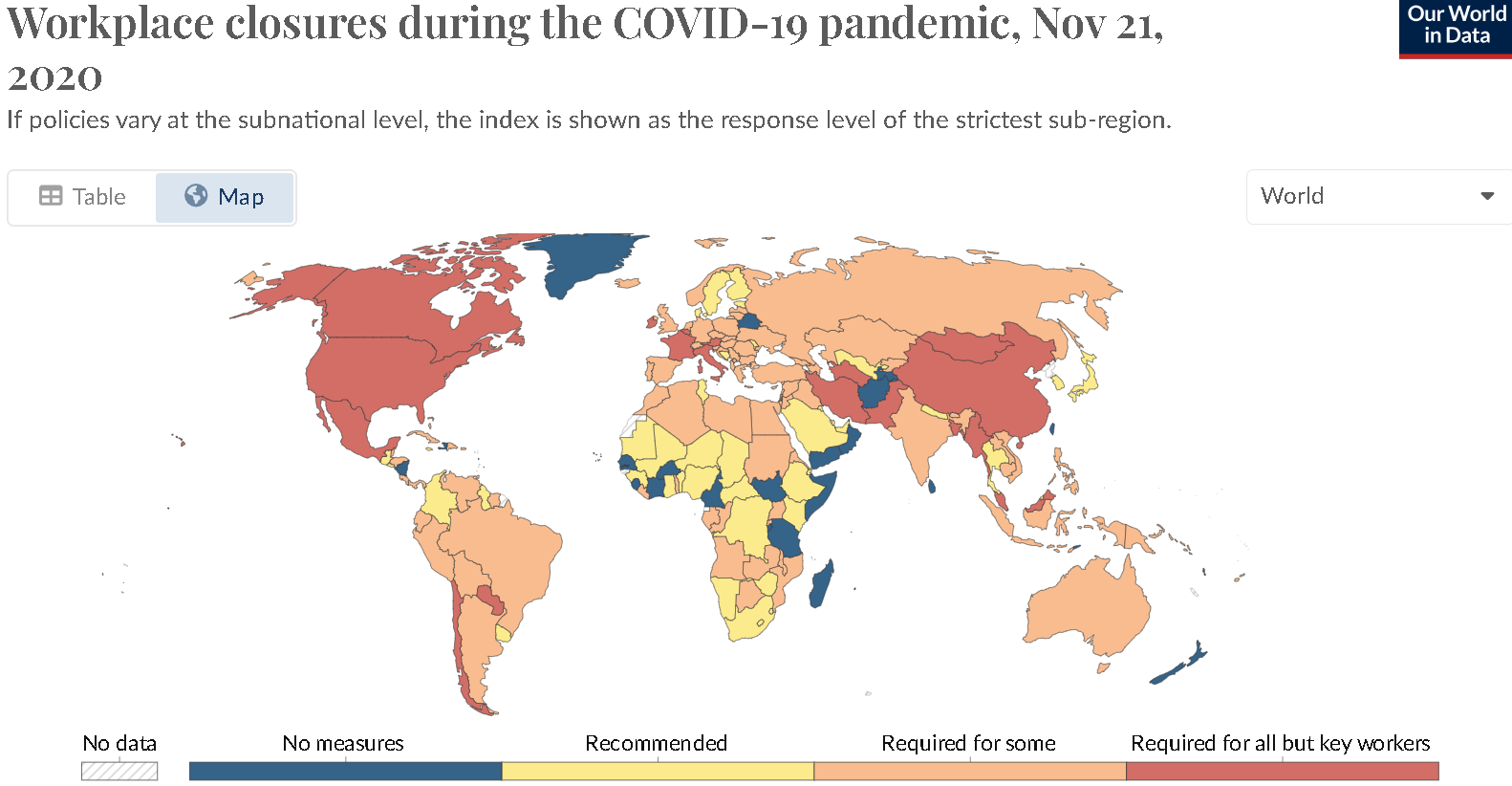
The 2020 pandemic led to a global shutdown.  Every nation closed schools at some point with the peak in April, but shutdowns continued for almost two years in some parts of the world. 

Almost every nation also shut down businesses although many poorer nations could not afford to stop people from working very long.  Here is a snapshot of business shutdowns from December 2020 which was almost a year after covid began spreading.  

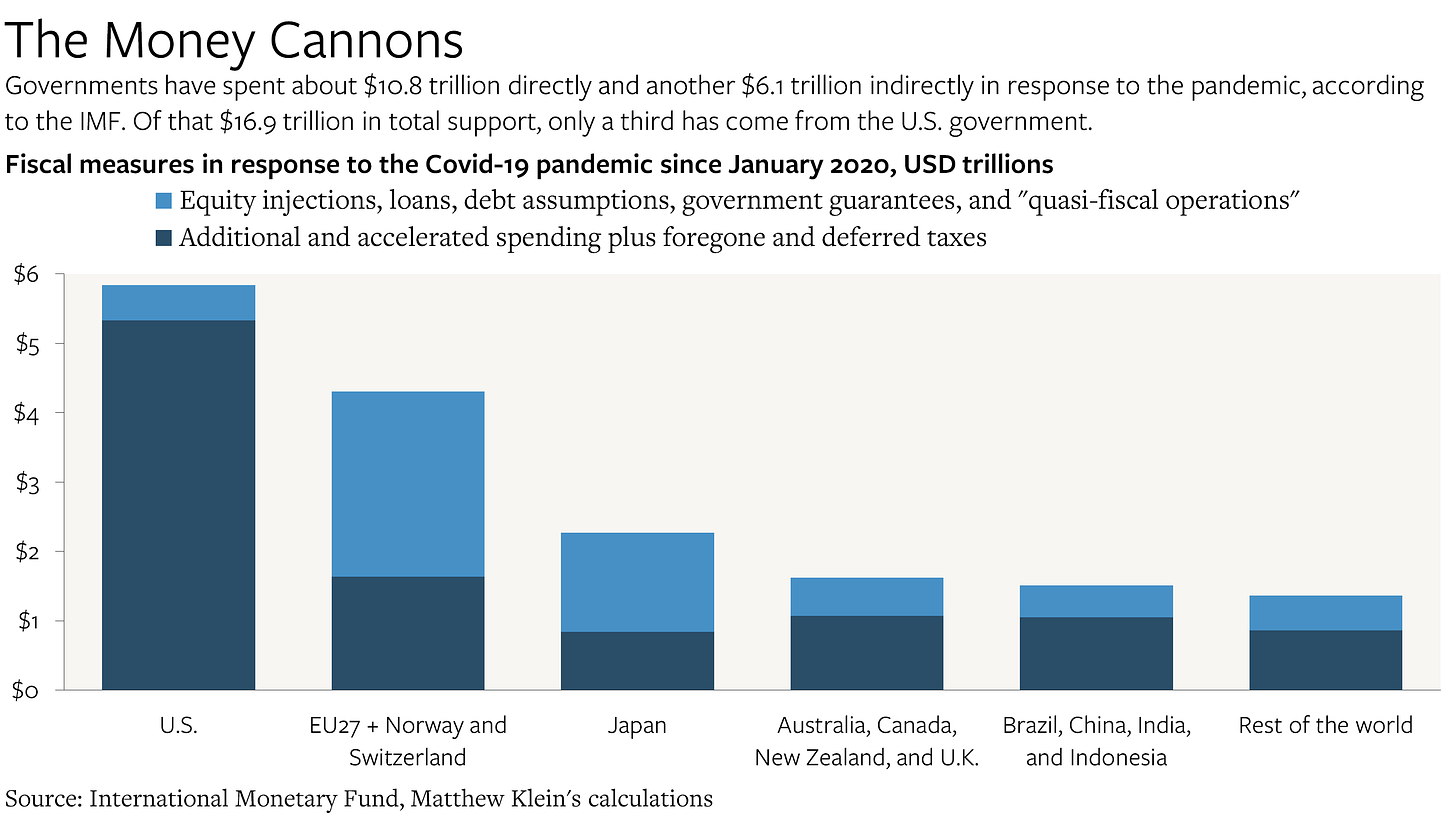
Matthew C. Klein reflected on the pandemic a year and a half after it began: 

It would have been weird if a global pandemic that’s shut down large swathes of business activity and has killed more than ten million people worldwide had no economic or financial cost. Yet in most rich countries, [a year and a half later] consumers are richer than before, workers’ wages are higher, and businesses are flush with cash. If most people had known—at the end of 2019—what the body count was going to be and what the current state of the economy would be, they would be amazed at how well things had turned out.

That’s not because the coronavirus has been beneficial, but because policy choices shifted the economic and financial costs of the pandemic…

When the pandemic first emerged in Wuhan, China’s Hubei province experienced an unmitigated economic collapse, with industrial output down by half and homebuilding down by 70%…

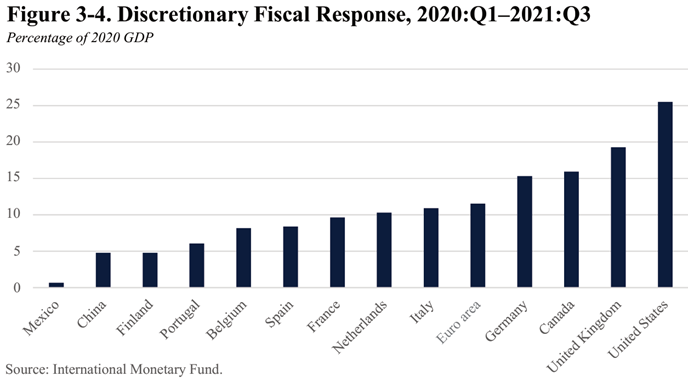
According to the the International Monetary Fund’s [October 2021] Fiscal Monitor, the world’s governments spent about $10.8 trillion [with the US leading the way by spending almost half of the global total.  Plus governments also added] about $6 trillion in “contingent liabilities” by guaranteeing the obligations of private borrowers and through “quasi-fiscal operations.”The combined fiscal firepower of the world’s governments was worth about a sixth of global GDP. In the rich countries, it was more like 30-40%… If it hadn’t happened, the economic consequences of the pandemic would likely have been worse than the Great Depression.

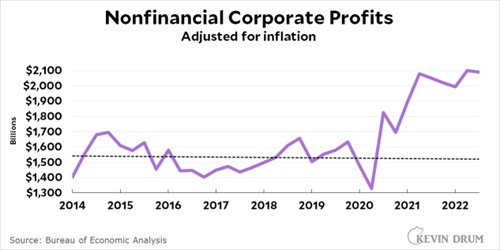
In the U.S., the government disbursed so much that the disposable income received by households and nonprofits from March 2020 through August 2021 was 11% higher than in the 18 months ended February 2020. Similarly, nonfinancial corporations generated 7% more in after-tax profits…

Eleven years after Bush implemented the first fiscal stimulus by sending out stimulus checks, Trump did it again, but the checks he sent out were much, much bigger.  This time the critics of Keynesian theory were mostly silent even though the stimulus was many times bigger than in 2008.  The major US fiscal stimulus acts included:

  1. $8.3B Emergency funding (March 6, 2020)
  2. $192B FFCRA (March 18, 2020)
  3. $2.2T CARES Act (March 27, 2020)
  4. $484B Paycheck P.P. (April 2020)
  5. $900B (December 2020)
  6. $1.9T (March 2021)

This totals $5.68T, but the GAO says the government only spend $4.6T, so evidentially a trillion dollars that was allocated never got spent.  That can happen with emergency funding bills as was the case with the $700B TARP program to bail out the banks in 2008 of which only $426B was disbursed and it ultimately generated a small profit and ended up costing taxpayers approximately zero.  

In addition, the Fed’s Quantitative Easing (Purchases) in 2020 were about three times bigger than in 2008.  Again, whereas the massive monetary stimulus was controversial in 2008, the 2020 stimulus was mostly just accepted as the new normal even though the 2020 monetary stimulus was MUCH bigger.  Another difference was that the Fed continued to increase monetary stimulus for six years after 2008 because the initial stimulus was inadequate whereas the fed began reversing the 2020 stimulus just two years later to combat inflation.  

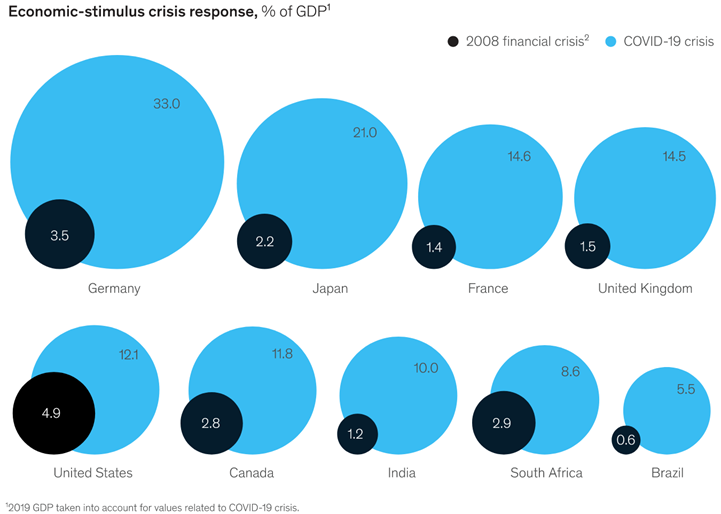
Here is a chart by McKinsey showing the relative size of the fiscal+monetary stimuli during just the first months of the Covid crisis versus the first two years of the 2008 crisis.  And the Covid stimulus would still expand much more after this graph was produced!

This graph shows just the fiscal stimulus for the first 1.75 years of the pandemic. Both fiscal and monetary stimulus continued after this too.


Source: White House.gov

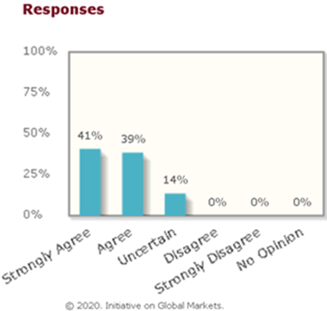
In addition to these demand-side stimulus programs, the Trump administration also promoted efforts to boost aggregate supply: lockdowns, mask mandates, massive vaccine production, and other public health efforts. Many of these efforts were difficult and controversial, but they were mostly supported by economists at the time. For example, here is a poll of elite economists done by the University of Chicago asking, “Will lockdowns reduce economic damage?” The elite consensus at the time was that it was good for the economy.

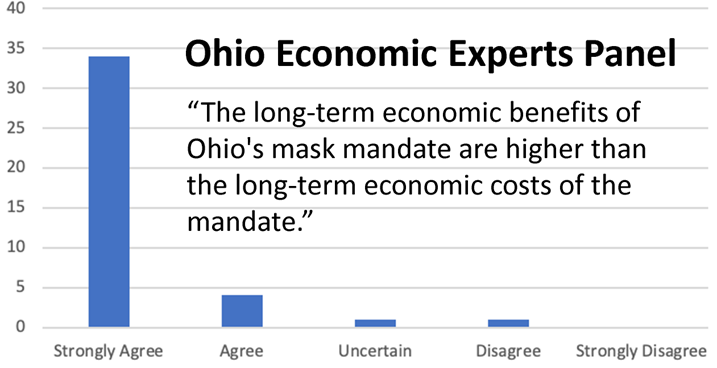
Here is a poll of Ohio economists (including yours truly) about mask mandates:

And the US had the best Covid vaccines earlier than any other nation which helped end the pandemic.

Was the 2020 recession caused by a demand shock or a supply shock?

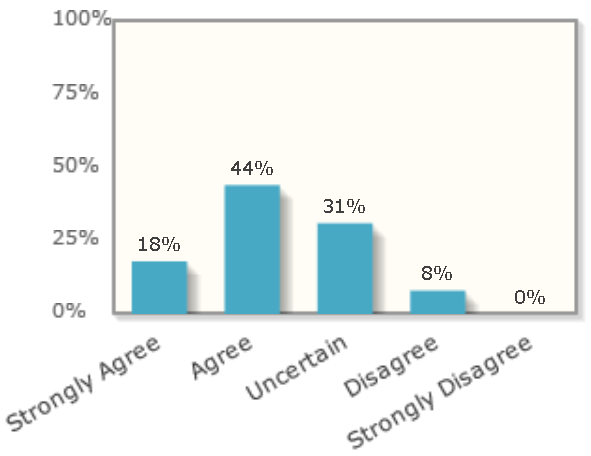
Aggregate demand and supply both contracted during the recession, but the following poll of elite economists shows that that they agreed that the problems “coming from reduced spending [would] be larger than those coming from disruptions to supply”:

They were right because during the brief recession the US economy nearly experienced deflation which can only be attributed to the demand shock dominating the supply problems.

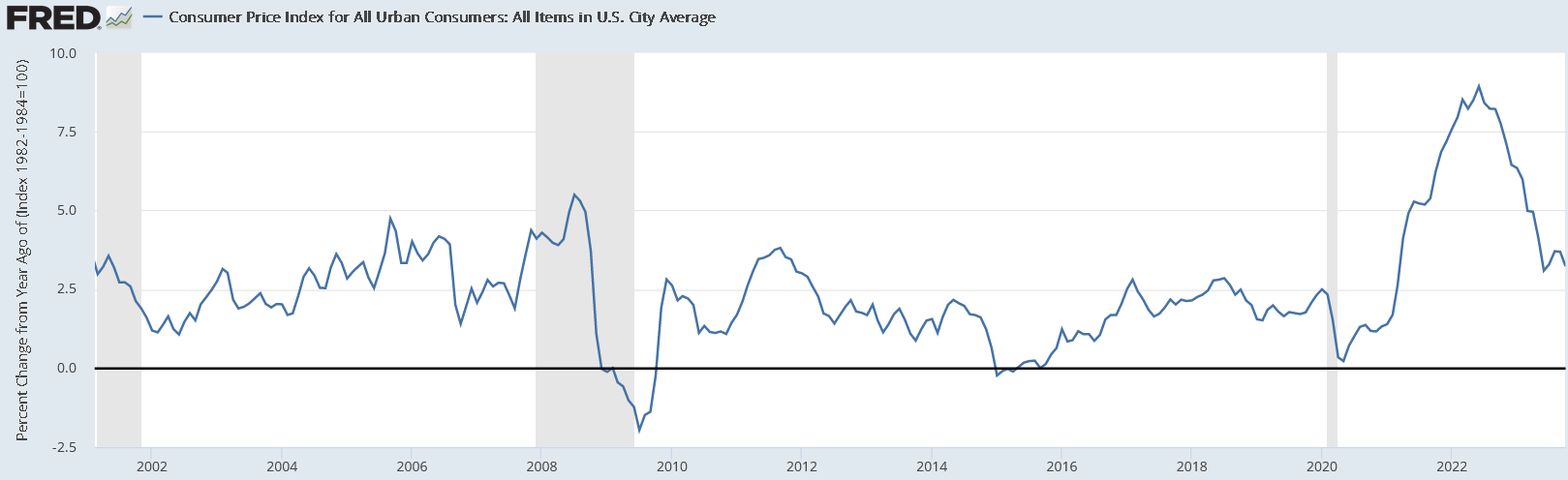
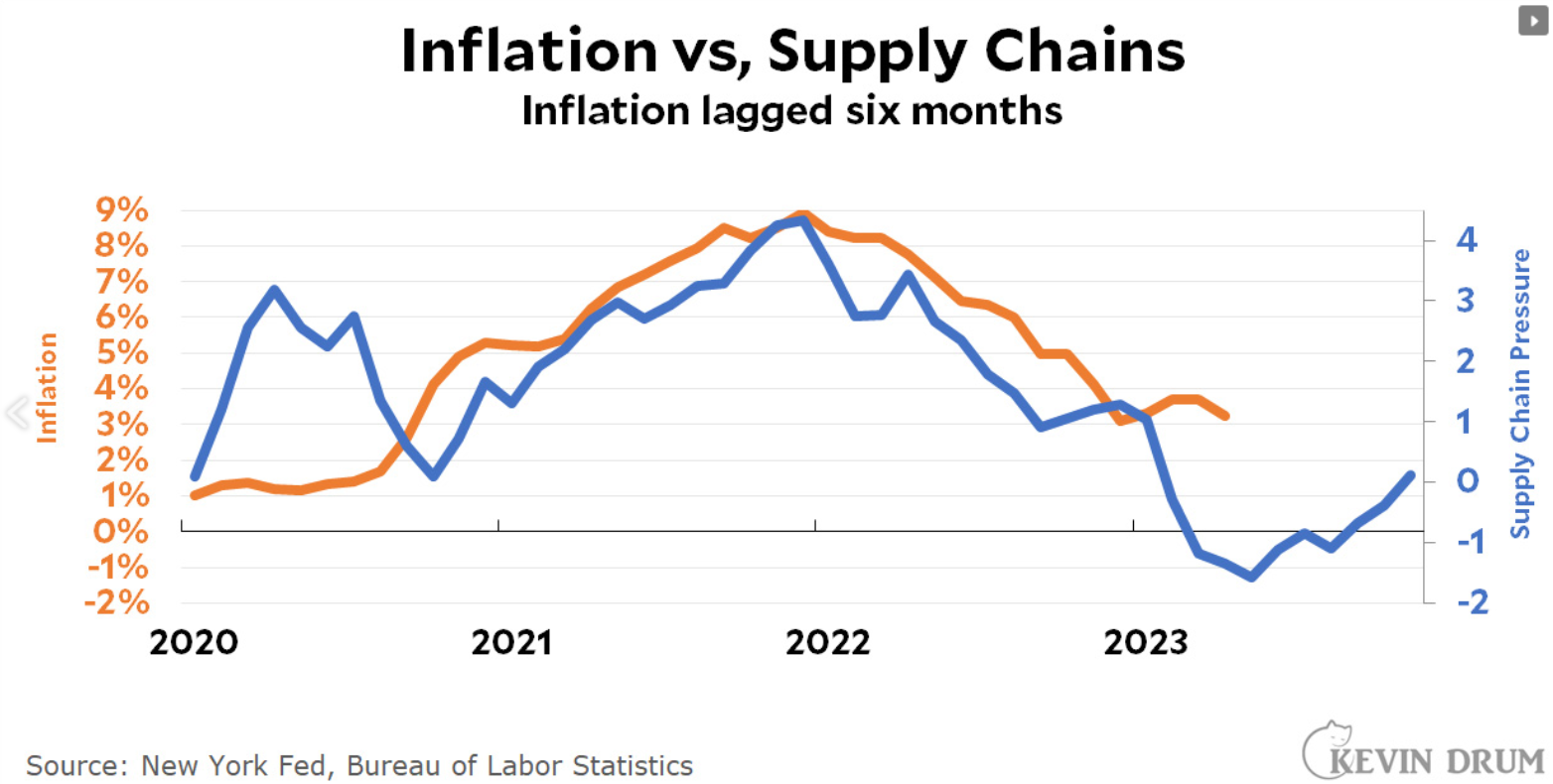
If the supply problems had been bigger than the demand problems, inflation would have risen during the recession (shaded area in 2020 above), but inflation plummeted during the actual recession and, as usual, when the recovery began, inflation immediately started to rise again and then the supply chain problems began to bite.  As you can see in the following graph, the supply chain problems in 2020 didn’t cause inflation because demand was even lower than supply, but demand already returned to normal in 2021 which collided with the supply constraints and produced inflation:

The big debate is whether the stimulus money supercharged spending too much with respect to the new supply constraints.  The supply-chain problems produced by the pandemic had reduced the capacity of the economy to produce as much as before the pandemic and inflation started taking off as a result when aggregate demand recovered. Then Russia’s invasion of Ukraine created a second supply shock in 2022 which caused a spike in gas and food prices because Russia was by far the biggest fertilizer exporter and the second biggest energy exporter in the world.  Inflation rose in nearly every nation on earth because everyone suffered the same supply constraints even though every country has a different fiscal and monetary policy.  It is impossible to know exactly how much of US inflation was due to unavoidable supply problems and how much was due to excessive fiscal and monetary stimulus. 

Some economists argue that the high inflation was good for America.  For example, the Market Monetarists believe there should always be elevated inflation to help recover after every recession because elevated inflation helps boost output and eliminate unemployment. By their logic, the inflationary US recovery might have been perfect because we want a little extra inflation to get the economy back to normal more quickly.

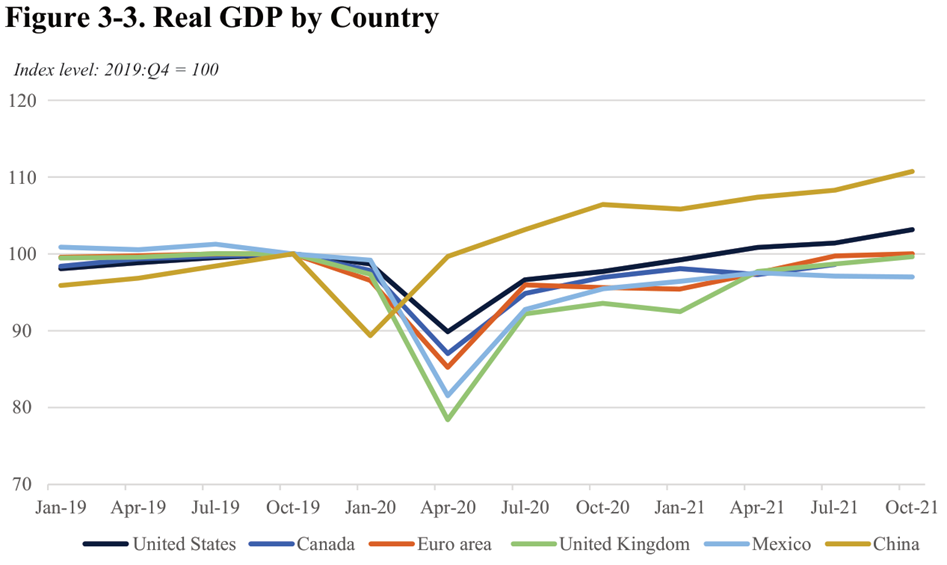
Whereas they argue that fiscal and monetary stimulus was ideal, others argue that America’s high inflation in 2022 demonstrates excessive stimulus. Still others argue that the inflation was inevitable and unavoidable due to the supply chain problems of 2020-23. This debate is unlikely to ever be completely settled, but even if you agree with those who argue that the fiscal and monetary stimulus was excessive, it was better than most other examples we can look at.  For example, the 2020 recovery was MUCH, MUCH more successful than the 2008 recovery and the US recovery from 2020 was more successful than other rich nations. 

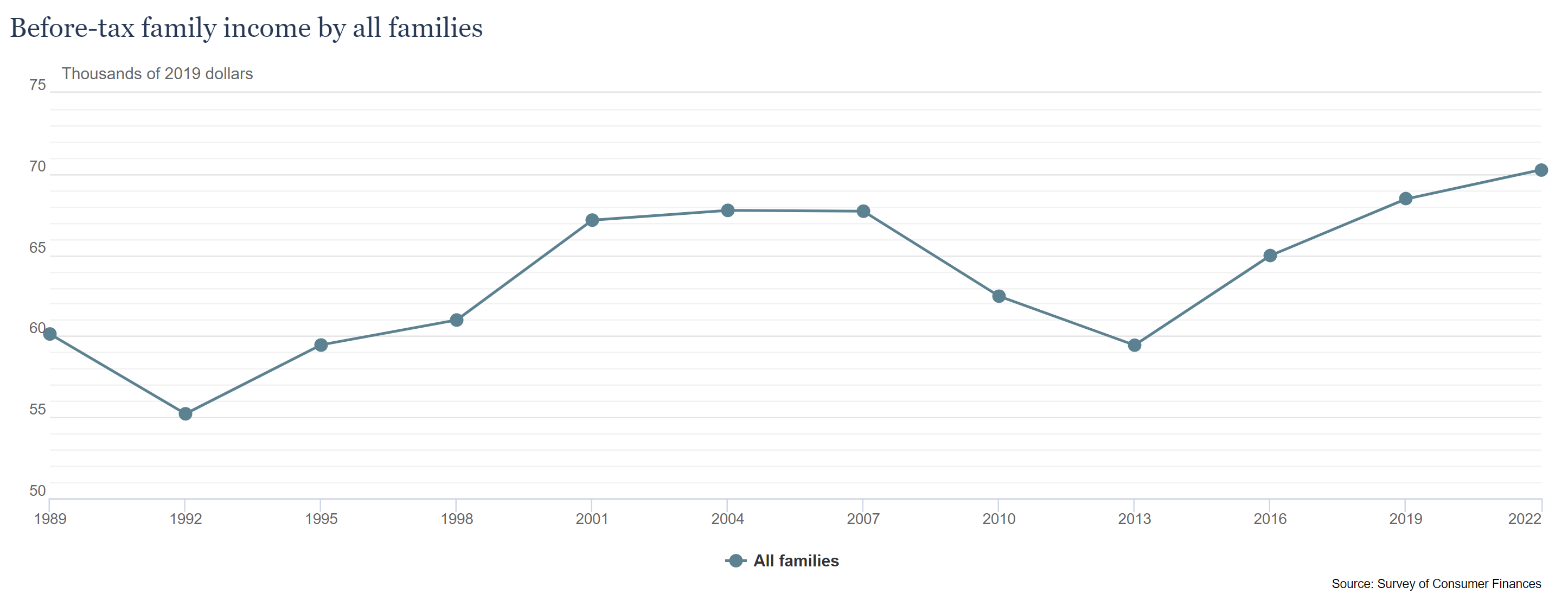
Note that China’s official statistics look better than that of the US, but nobody completely trusts their statistics, and their economy was a basket case in 2022-23, shortly after this graph was produced.  Plus real median family income went up, so the increase in US GDP didn’t just go to the wealthy!

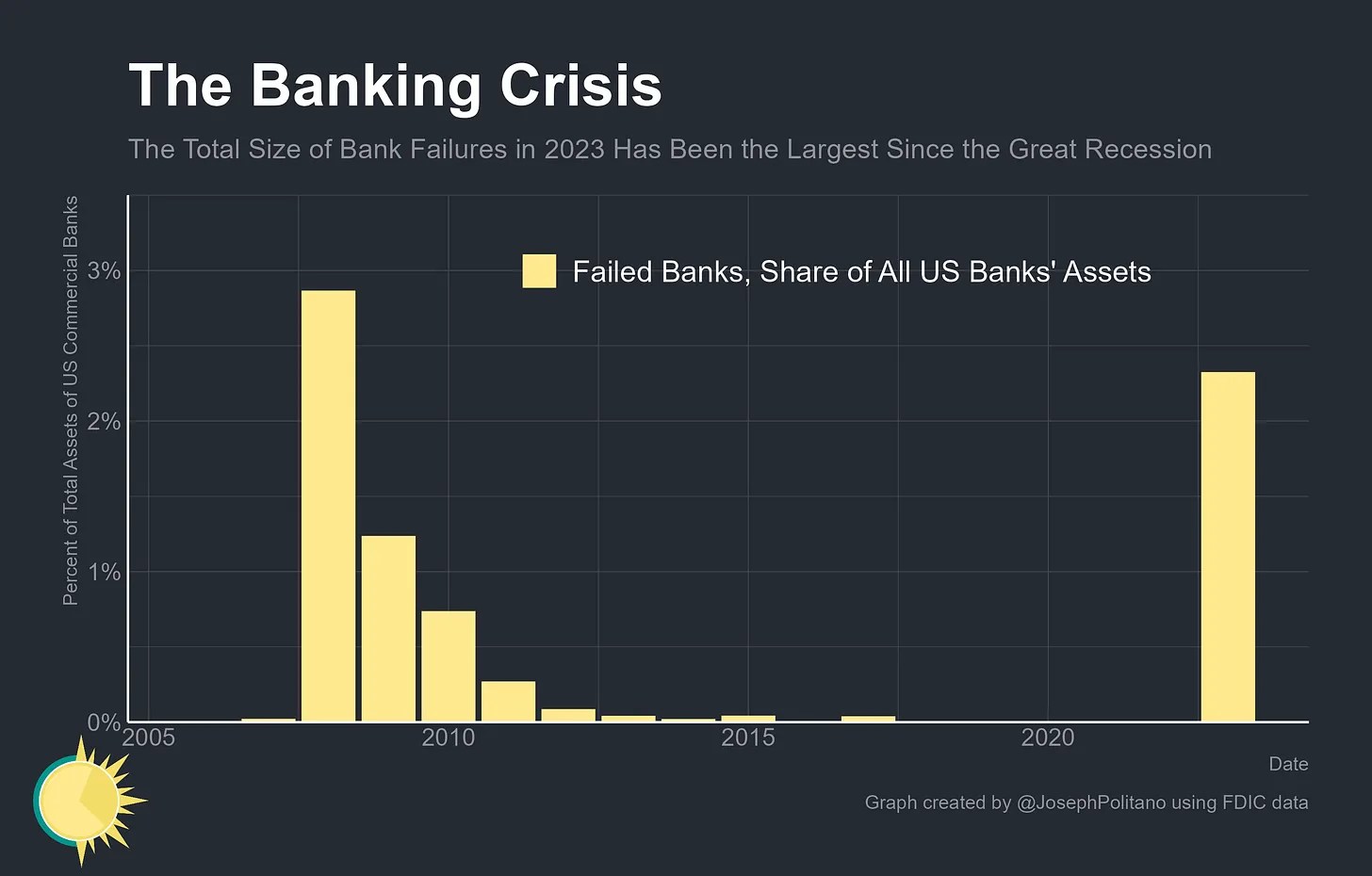
Although the US didn’t suffer as much from the Ukraine was as Europe, the US also had a major banking crisis in 2023 that was managed so well, it had little effect on the overall economy:

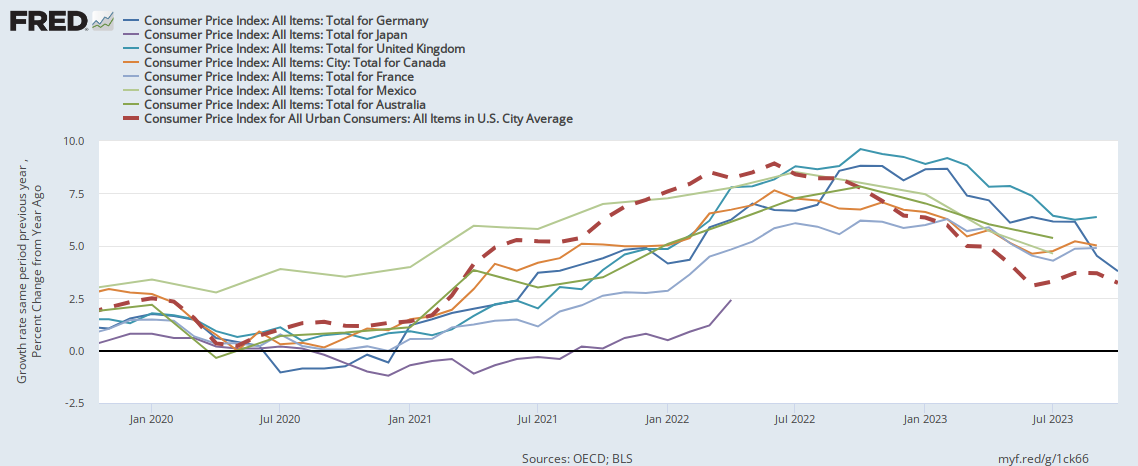
Plus, the US inflation rate rose a similar amount compared with other rich nations which indicates that inflation was more of a global phenomenon rather than specific to US stimulus policy (which was bigger than most other nations) and US inflation dropped below most other nations last year so excessive US stimulus must not have been the main cause of our inflation issues and the US has had better growth and now has better inflation than just about any other rich nation.

The Fed would like to claim credit for bringing inflation down, but there two reasons to be skeptical of this hubris.

1.  There is a well-documented lag between when the Fed increases interest rates and the subsequent affects on the economy.  Most estimates of the lag are at least a year, and the Fed only started raising rates in the middle of 2022, so it is much too early for most of the Fed’s actions to have any affect on inflation yet.  We won’t get the full brunt of the Fed’s recent rate hikes until next summer at the earliest.

2.  As Kevin Drum says, the main mechanism for rate hikes to reduce inflation is by slowing demand thereby increasing unemployment.  This was how it worked in the only other time the Fed brought inflation down by an equivalent amount in the 1980s.

Rate hikes → demand slows → inflation comes down

So far demand has been growing robustly, so there is no reason to believe the Fed caused any of the decline in inflation.

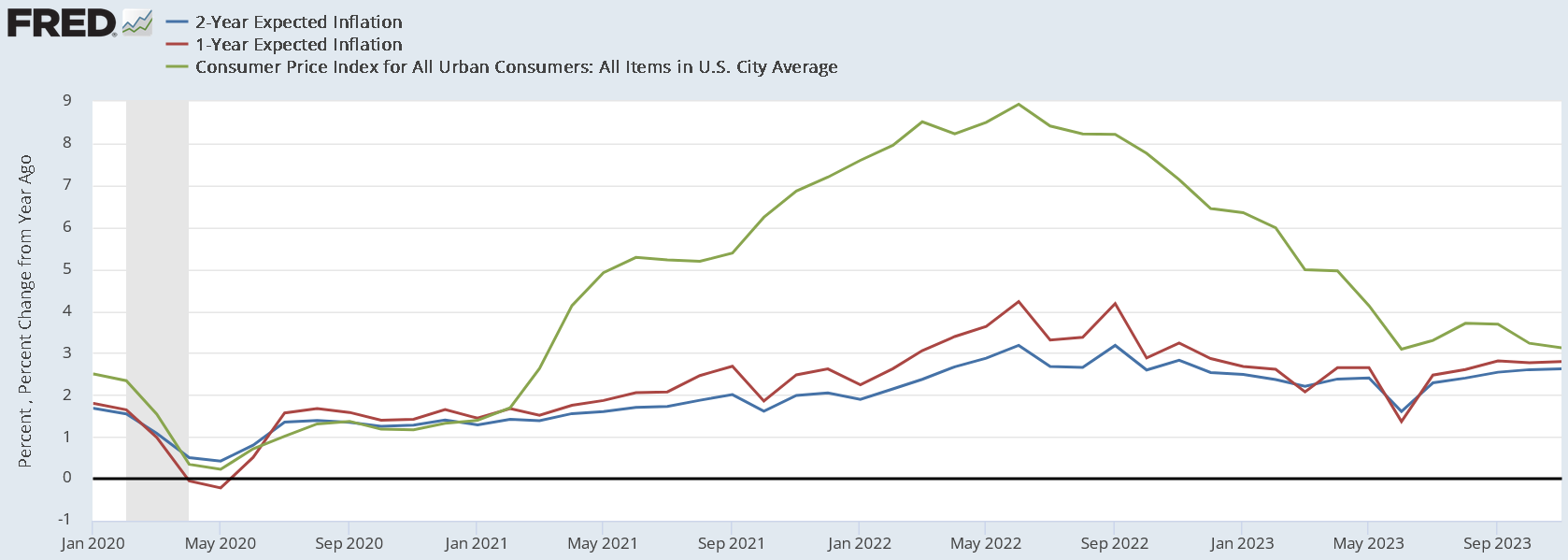
The only other theory for how the Fed could have an effect on inflation is by changing expectations, but there is only very weak evidence for this theory in general and in the present case, inflation expectations never rose much and they have been flat for the past year.  So, since inflation expectations have not really changed, they cannot explain why inflation has plummeted.

*My the claim that the first Keynesian fiscal stimulus to fight a recession was in 2008 may seem confusing because there had been many previous fiscal stimuluses.  But none of the prior examples were specifically timed to reduce a spike in cyclical unemployment AND used Keynesian logic as a justification.  Most of the prior stimuli were either well outside of a recession (like Kennedy’s 1964 tax cut) or not based on  Keynesian logic like the massive fiscal stimulus FDR spent for WWII or Reagan’s 1981 tax cut and spending increases which he based upon “supply-side” theory.   The core idea of Reagan’s “supply side” justification was the same as Kennedy’s who also argued that the government would increase tax revenues by decreasing tax rates!  The “supply side” theory was promoted as an alternative to Keynesianism.  Keynesians argue that a tax cut ONLY stimulates the economy during recessions whereas the supply siders believed tax cuts always stimulate the economy regardless of the level of unemployment.  Furthermore, in  Keynesian theory, a fiscal stimulus only works if there is excess hoarding of money.  That is the root cause of a typical recession.  A fiscal stimulus only works because the government borrows that excess money and puts it back into the economy.  When the economy is operating at full employment, Keynesians argue that deficit spending should be cut (by raising taxes and/or cutting spending) to help reduce inflation and free up private savings to be lent to businesses for their expansion and thereby increase aggregate supply.  

Posted in Macro

Does affirmative action in education reduce racial disparity?

The goal of affirmative action is a good one:  It’s to reduce racial disparity.  Like most Americans, I support this goal, but I don’t personally care much about the Supreme Court decision banning affirmative action in college admissions because affirmative action does very little good and may even be harmful for long-run racial equality.  I don’t know whether it does a little good or a little bad, but because it clearly does very little, the decision does not deserve much political capital. Plus, given how unpopular affirmative action is, its end was inevitable.

Let’s take the best-case scenario for affirmative action.  It almost exclusively affects students that go to the most exclusive schools that admit less than 25% of applicants.

Only about 3% of African American college students go to these schools and probably about half of these students would be able to get in without affirmative action.  But let’s be more generous about our rounding and say that 2% of African American college students get to go to a more exclusive school due to affirmative action.  That is probably helpful to them, but maybe not because of what the economics literature calls “mismatch theory”.  This is the idea that affirmative action actually harms students by pushing them into courses they’re not prepared for.  I think better schools are generally better for most students, but the difference in school quality makes very little difference overall.

Whereas it is true that graduates of elite schools make significantly more money than graduates of ordinary colleges, that doesn’t mean that anyone would make more money if they attended an elite school. The defining characteristic of elite schools is their ability to only select students that they think have high future potential. Relative to normal schools, elite schools are dramatically better at screening for elite students and there is much less evidence that elite schools are significantly better at teaching. So although some papers claim that elite school graduates make 5% more than other graduates, this is not necessarily due to better education given that the main distinguishing characteristic of elite schools is their ability to cream skim students who are easier to teach than 95% of college students. The best paper that avoids this selection-bias problem just looks at students who got in to an elite school, but decided to go to a normal school. This paper shows there is no difference in life outcomes at elite schools. So normal schools and elite schools may be equally good at educating students, but elite-school students may still achieve better average outcomes due to the elite selection process.  Because affirmative action just pulls relatively high-achieving students from good colleges into elite colleges, it probably has very little effect on life outcomes.

In any case, if mismatch theory were right, then the biggest harm would go toward student athletes and the children of rich donors, because they are the main group with lower academic preparation at elite schools.

In 2002, James Schulman and former Princeton University President William Bowen looked at 30 selective colleges and found that athletes were given a 48 percent boost in admissions, compared with 25 percent for legacies [children of rich alumni] and 18 percent for racial minorities.

Athletes and ‘legacies’ at elite schools are disproportionately rich and white.  I think we’d all be in favor of eliminating this form of ‘affirmative action’ which reveals the real priorities of elite schools and the inherent unfairness of elite higher education in America.

Elite schools may be slightly better at educating students because they spend a lot more money per student, but elite schools are also much less efficient at education than average, and spend disproportionate resources cream skimming students, so they do not have to be particularly good at educating students and they will still get high-earning graduates. I have read that elite schools discourage students who would otherwise successfully go into STEM majors at a less selective school and decide that they prefer an easier major when thrown into an elite school. This is one place where mismatch theory may be true and this effect could be part of what counteracts any beneficial effect of elite education for non-STEM majors. STEM majors at elite schools do not earn more than at normal schools and if less-prepared students are more likely to switch out of a STEM major at elite schools, then that would be harmful and minority students (Asians excepted) are more likely to switch out of a STEM major.

So it isn’t completely clear whether or not elite education benefits minority students relative to normal universities. Given that affirmative action only helps about 2% of minority college students get into a more elite school and the fact that about 32% of African Americans get a college degree, then affirmative action only directly benefits about 6 out of every 1000 African Americans.  That is pretty trivial even without deciding the controversy over whether those 6 people really get any benefit from going to a more elite school. This is just my back-of-the envelope estimate, but Zachary Bleemer is a big proponent of affirmative action who examined the University of California system in detail and argued that the end of affirmative action initially reduced the number of under-represented minority students by about 800 per year in a university system that educates 280,000 students (29% of whom are under-represented minorities), so this is a more precise estimate which demonstrates that only a very small fraction of students are affected.  Bleemer thinks that it should have been maintained to benefit those 800 students, but the University of California system has since found other ways to benefit disadvantaged students as will be shown below.

No wonder then that affirmative action isn’t even popular among it purported beneficiaries, African Americans & Hispanics. According to a recent Washington Post poll, 47% of African Americans would support the Supreme Court ban! Affirmative action only helps a few of the least needy African Americans who are already privileged relative to the vast majority of African Americans because they are in the top quarter of college-bound students.  Affirmative action disproportionately benefits richer Blacks, some of whom could pass as white, and many of whom are foreign students or recent immigrants from elite African families. It is not something that most African Americans expect to benefit from.

It is even possible that affirmative action could be harmful to African Americans as a whole because it increases racial division.  There is a widespread misperception that most African Americans benefit from affirmative action which means that employers discount the hard-fought achievements of African Americans as being unearned and undeserved and that would hurt the job prospects of the >99% of African Americans who got nothing from it. Given the fact that affirmative action helps almost nobody, nothing could be further from the truth and yet its existence is one of the reasons why the majority of white Americans think that African Americans face less discrimination than whites in according to some polls.  Even president Obama’s remarkable accomplishments were diminished by critics who claiming that he was undeserving and only became president by benefitting from affirmative action.  That kind of attitude hurts all African Americans and helps explain why almost half do not approve of affirmative action.

Affirmative action also politically divides poor whites from poor minorities and engenders racial hostility.  Racial quotas have historically been particularly harmful to Asians and this perception among Asians that they are disproportionately hurt by affirmative action is why an Asian advocacy group was the plaintiff that won the Supreme Court case banning affirmative action.  Perhaps ending affirmative action can help bring more political unity between racial minority groups and between underprivileged families of all races to work for more equality of opportunity in America. I agree with the Marxists that race is a social construct that has been consistently used by elites to divide the working classes in order to maintain inequality and class hierarchy.

Focusing on more precise measures of disadvantage like class is better for increasing equal economic opportunities for all races without causing all the problems of racial affirmative action.  As is often the case, California is about 20 years ahead of the rest of the country on this issue.  California banned racial affirmative action 20 years ago and yet their minority participation at elite schools has approximately bounced back to where it was by changing focus towards less controversial and more accurate measures of disadvantage like economic class.

Source: L.A. Times

Elite schools like affirmative action because it makes them look egalitarian, not because of a deep commitment to social justice so it is not surprising that they fill their racial quotas by finding students who are 1/8th Native American (and 7/8th white) or the children of rich Black Dominican immigrants. The whole point of elite education is elitism, not egalitarianism.  Affirmative action makes elite schools look like they are somewhat egalitarian, but it does nothing to fix the main inequalities of our educational system which lavishes vast resources on the top 5% of our college students and neglects the bottom 50%.  Affirmative action merely disguises the incredible inequality built into the entire system like lipstick on a pig.

If we really want to be inclusive and egalitarian, we should care more about putting more resources into the normal schools that educate 95% of minority students and end the massive government subsidies and tax advantages that go to wealthy elite schools. Plus, we should also ban the massive affirmative action for rich ‘legacy’ students and well-to-do student athletes. That is a much bigger source of unfairness than race-based affirmative action and ending it would open up space for many more disadvantaged students. Plus, if elite schools are so good at educating students, then they should expand and admit a lot more students. All elite schools could afford to double in size and they would still have more money per student than the average college has. That would be the best affirmative action program of all, but it would be the radical opposite of the whole point of elite education which is to create elite exclusivity through constructing artificial scarcity.

Conclusion

Affirmative action only helps at most a couple percent of minority students go to elite schools and these are already the highest achieving minority students who need the least help. It isn’t even clear that these students achieve better life outcomes. However, the misperception that affirmative action is pervasive means that the achievements of minorities are often incorrectly judged to be undeserved and causes racial divisiveness which prevents real reforms that could benefit all underserved people. Given that African Americans are ambivalent about affirmative action and it is deeply unpopular among all other groups because of perceived unfairness means that it is politically vulnerable in a democracy and we should look for more effective alternatives such as increasing enrollment at elite schools, and focus more upon individual measures of disadvantage such as income, wealth, and neighborhood as the University of California system has done which can better serve disadvantaged individuals while avoiding the problems of purely race-based affirmative action.

Posted in Discrimination, Labor

Corporate takeover of groceries

Stacy Mitchell is the executive director of the Institute for Local Self-Reliance who studies the problem of big businesses eating the entire economy. An economy full of small businesses has

  1. Less monopoly power which can mean lower prices.
  2. Greater diversity of products and services because big businesses prefer standardization.
  3. More economic freedom for entrepreneurs to own their own business. As the economy becomes more dominated by large corporations, it becomes impossible for small businesses to compete.
  4. Less inequality because hierarchy is one of the main causes of inequality and big businesses are big hierarchies.
  5. Healthier democracy because concentrated corporate power corrupts politics and even distorts mass media.

On the other hand, big business can achieve much higher productivity and fewer large corporations are much easier to unionize and regulate. Too much small business is ugly!

But Mitchell points out in the NYTimes that big companies (groceries in this case) can use their market power to get sweatheart deals from suppliers that are unfair to smaller grocery stores and put the small groceries out of business not due to greater efficiency of the big corporations, but due to their greater market power.

Major grocery suppliers, including Kraft Heinz, General Mills and Clorox, rely on Walmart for more than 20 percent of their sales. So when Walmart demands special deals, suppliers can’t say no. And as suppliers cut special deals for Walmart and other large chains, they make up for the lost revenue by charging smaller retailers even more, something economists refer to as the water bed effect.

This isn’t competition. It’s big retailers exploiting their financial control over suppliers to hobble smaller competitors…

In the 19th century, Congress barred railroads from favoring some shippers over others. It applied this principle to retailing in 1936 with the Robinson-Patman Act, which mandates that suppliers offer the same terms to all retailers. The act allows large retailers to claim discounts based on actual volume efficiencies but blocks them from extracting deals that aren’t also made available to their competitors. For roughly four decades, the Federal Trade Commission vigorously enforced the act. From 1954 to 1965, the agency issued 81 cease-and-desist orders to stop suppliers of milk, tea, oatmeal, candy and other foods from giving preferential prices to the largest grocery chains.

As a result,… Independent grocery stores flourished, accounting for more than half of food sales in 1958… This dynamism fed a broad prosperity. Even the smallest towns and poorest neighborhoods could generally count on having a grocery store. And the industry’s diffuse structure ensured that its fruits were widely distributed…

Then, [in] the late 1970s, the law fell into disfavor with regulators, who had come to believe that allowing large retailers to flex more muscle over suppliers would lower consumer prices. For the most part, the law hasn’t been enforced since. As a top Reagan administration official explained in 1981, antitrust was no longer “concerned with fairness to smaller competitors.”

This was a serious miscalculation. Walmart, which seized the opening and soon became notorious for strong-arming suppliers and undercutting local businesses, now captures one in four dollars Americans spend on groceries. Its rise spurred a cascade of supermarket mergers, as other chains sought to match its leverage over suppliers. If the latest of these mergers — Kroger’s bid to buy Albertsons — goes through, just five retailers will control about 55 percent of grocery sales.

The reality is even worse because HEB’ enormous market power is concentrated in Texas, Meijer’s market power is concentrated in the eastern Midwest, and Publix is concentrated in the Southeast. If we ignore Albertson’s control over many other grocery chains, 98% of Albertson’s brand stores are in just 11 states. If you live in other parts of the United States, you probably haven’t even heard about any of these giant supermarket chains. The truly national grocery chains include the three biggest: Walmart (#1), Amazon (#2), and Costco (#3) plus Target and the relatively small German-owned companies Aldi and Trader Joe’s.

As grocery retailers gained market power over food suppliers, they pressured food processors to merge to counterbalance retailer bargaining power and because big retailers prefer the simplicity of dealing with a few large suppliers rather than numerous small, local suppliers. As a result…

Supermarket aisles may seem to brim with variety, but most of the brands you see are made by just a few conglomerates…

… Meanwhile, the decline of independent grocers, which disproportionately serve rural small towns and Black and Latino
neighborhoods, has left debilitating gaps in our food system [called food deserts where the grocery chains and dollar stores have wiped out the market for small grocers and locate their large stores far away].

… We need to stop big retailers from using their enormous financial leverage over suppliers to tilt the playing field. By resurrecting the Robinson-Patman Act, we could begin to put an end to decades of misguided antitrust policy in which regulators abandoned fair competition in favor of ever-greater corporate scale. There is promising momentum. Last year an unusual coalition of Democratic and Republican lawmakers sent a letter to the F.T.C. urging it to dust off Robinson-Patman. The agency began a broad inquiry in late 2021 into grocery supply issues, which could uncover evidence of price discrimination. This year the agency opened investigations into soft drink and alcohol suppliers for possible violations of the act.

Unfortunately, the NYTimes put an inappropriate title on the article and claimed that high grocery prices are due to their monopoly power, and there is a grain of truth in that, because it is soaring corporate profits that really has been a major cause of inflation as they raise prices without raising wages, but overall, groceries are actually starting to get cheaper recently, so the inflation story is a bit more complicated than just monopoloy power.

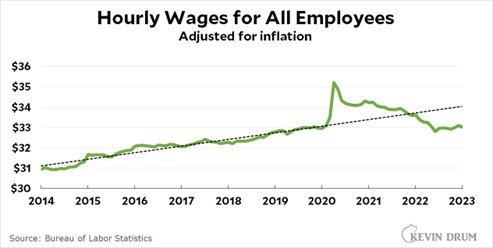
Inflation was very low during 2020 when wage rose and then wages had been falling for most of a year when inflation started to rise in 2021 and soon fell below trend as they failed to keep up with inflation.

Meanwhile, corporate profits were unusually high and rising in 2021.

So greater corporate power relative to labor is increasing real corporate profits and reducing real wages, but higher inflation is caused by overall macroeconomic conditions and the main way that inflation is related to this episode of rising inequality is that higher inflation makes it easier to cut real wages.

Posted in Labor, Macro, Managerial Micro

The cost disease of services

Suppose there are two industries in a nation.  One has rapidly rising productivity growth and the other has stagnant productivity growth.  Which one would tend to grow and see rising wages?  Ironically, the industry with stagnant productivity will probably grow and wage will rise in both!

This odd tale has really happened.  Manufacturing (and agricultural) productivity has skyrocketed over the past two centuries whereas the productivity of services has been excruciatingly slow or even nonexistent.  As a result, the percent of the economy devoted the manufacturing and agriculture has plummeted and been replaced by that laggard, services.  Meanwhile wages in services have risen just as fast as in manufacturing and agriculture, so there is zero correlation between productivity growth and wage growth!  It doesn’t seem fair.

Derek Thompson at The Atlantic examined this phenomenon:

[The] National Journal [had a] special report on the rise and fall and rise of manufacturing. The spectacular graphic compares employment by sector in 1947 and 2007 and its most important lesson is a whopper. Manufacturing and agriculture employed one in three workers just after World War II. Today, those sectors employ only one in eight.

Where did all the making-stuff and growing-stuff jobs go? They went into services.

…The big story about American jobs in the post-war period is this: The manufacturing/agriculture economy shrunk from 33% to 12%, and the services economy grew from 24% to 50% [plus government, food services, energy and mining, and construction have all stayed about the same]. …as manufacturing and agriculture got more efficient, they required fewer American workers, while the services industry (which had slower efficiency gains since it has more person-to-person work) required more employees to keep up with the rising demand for consulting, nurses, teachers, computer technicians, and so on. This isn’t a sad story, or a happy story. It’s just what’s happening…

Closing thought: Why isn’t anybody talking about the tragic decline of agriculture? [Agriculture’s] share of workers has fallen by 80 percent in the last 60 years. Nobody seems to think that’s much of a tragedy, but we do consider it tragic that manufacturing has lost 60 percent of its share over the same period. Are we being hyperbolic about the decline of manufacturing…?

…Manufacturing jobs have declined as a share of the economy. But manufacturing hasn’t declined as an industry. It’s grown. By a lot. …Output has sextupled.

Here is the data from FRED. Manufacturing production (blue line) has grown about 150% since 1975 even with dips during recessions.  Manufacturing employment (red line) was about 50% bigger at its peak in 1979.  So American manufacturers are producing a lot more output with a lot fewer workers.

American manufacturers can afford expensive American workers because their productivity keeps rising. In 1960, labor costs in manufacturing typically accounted for around 30% of total manufacturing costs; by 2000, they were generally down to 12-15%.

Farming is a similar story.  In nearly all developed nations, farm production is three times bigger than in 1950 and the number of farm workers has plummeted to the point where only about 1% of American workers is in agriculture and they only contribute about 1% of GDP.  Whereas productivity in making stuff has skyrocketed, the productivity of producing services like psychotherapy, live concerts, education, and church services has not risen and the relative scarcity of services compared with the abundance of low-cost stuff at our disposal (literally) has caused the relative cost of services to soar.  This is often called, “the cost disease of services.

To understand the cost disease, start with a simple observation: whatever the economy’s average rate of productivity growth, some industries outpace others. Take car manufacturing. In 1913 Ford introduced assembly lines to move cars between workstations. This allowed workers, and their tools, to stay in one place, which cut the time to build a Model T car from 12 hours to less than two. As output per worker grows in such “progressive” sectors, firms can afford to increase wages.

In some sectors of the economy, however, such productivity gains are much harder to come by—if not impossible. Performing a Mozart quartet takes just as long in 2012 as it did in the late 18th century. Mr Baumol calls industries in which productivity growth is low or even non-existent “stagnant”.

Employers in such sectors face a problem: they also need to increase their wages so workers don’t defect. The result is that, although output per worker rises only slowly or not at all, wages go up as fast as they do in the rest of the economy. As the costs of production in stagnant sectors rise, firms are forced to raise prices. These increases are faster than those in sectors where productivity is improving, and faster than inflation (which blends together all the prices in the economy). So prices of goods from stagnant sectors must rise in real terms. Hence “cost disease”.

The cost disease of services does not mean that services have become unaffordable.  Much to the contrary, services are more abundant today than ever before because 80% of Americans now work in services whereas 200 years ago it was closer to only 20%.  However, the opportunity cost of buying services is much, greater today than in the past.  Whereas 200 years ago, a simple shirt might have been worth as much as a week of college education, today a week of college is worth many, many shirts.  Education has always been expensive, but everything used to be expensive and today we live in a world of material abundance where services still remain expensive despite the fact that they are more abundant than ever before.

The real price of services is rising because the real value of labor is rising which means that workers can still afford about the same amount of services as ever before.  In other words, when workers buy services, we are still giving up about the same amount of work time as in the past on average.

Suppose there is an economy that only produces hammers and therapy.  In a society that requires 40 hours to produce a hammer, each hammer will cost about 40 hours of therapy and an hour of therapy will be worth 1/40th of a hammer.   When manufacturing productivity increases to 1 hammer/hour, there will be a cost disease of services because an hour of therapy will rise 40-fold to cost a full hammer per hour.  Because people don’t need lots more hammers when their price drops (demand is inelastic) and therapy is a normal good that we will buy more of as incomes rise, people end up buying a lot more therapy despite the massive rise in its opportunity cost.

This basic story actually happened for manufactured goods and food versus services. Just substitute physical goods for hammers in the above example and substitute services for therapy and you have the basic economic history of the past two centuries.

Thus the cost-disease of services cannot make services less affordable than in the past because they become more abundant.  They only seem less affordable in comparison to their opportunity cost.  THE reason services are rising in cost is because wages are rising in cost and that means we will always be able to afford services.  The cost-disease is a very good thing because it is really just an odd way of talking about rising wages.  Inequality will still be a problem as some wages rise more than others, but the “cost disease” of wages is a very good thing.  The cost “disease” simply means that as goods become more abundant, we can have more goods and more services too, but that services will seem more expensive by comparison with goods.

The real problem with the cost disease of services is that productivity growth in services is so slow. As more and more of the economy is devoted to this sector with slow productivity growth, overall productivity growth will also slow down and this has been happening.  Slow productivity in services (>80% of the economy) is slowing overall productivity growth in rich countries and this will also mean slower income growth unless we can find a way to boost productivity in services as well as in manufacturing.

As of 2021:

  • 1.7% of Americans produces all our food, agricultural goods, mining and forestry.
  • 7.8% of American workers produce all of our manufactured goods
  • 4.7% of workers do all of our construction
  • and 5.8% of Americans are self-employed in nonagricultural work which is also mostly services and construction.

So altogether, only about 9.5% of American workers produced all of our physical goods (other than construction) in 2021!  The other 90% of us have been working in low-productivity-growth jobs.  Unfortunately, productivity growth in construction has not been much better than in services, and that is one reason why housing is not getting a lot cheaper like manufactured goods are.

The “cost disease” also explains a big reason why all industrialized nations have seen a major growth of government — the government mostly produces services!  So whenever there is a big growth of private-sector services, you should expect to see a similar growth of government services

The above graph omits data for France and Germany during the world-war years or they would have had a huge spike then too.  Another distortion in the graph’s data is that US spending appears smaller than the reality because this graph does not include state and local government expenditure.  That is much bigger in the US federal system than in most countries because government is much more centralized in smaller countries. There is no point having a layer of state government in any place where the entire country is smaller than the state of California, so in Europe, the federal government also fills the roles that state governments are in charge of in the US.  

I am not worried about the “cost disease” of services for wellbeing because it means that people can afford more services and more goods as long as rising inequality doesn’t make some essential services, like healthcare, unaffordable for vulnerable people…  Oops, that IS a problem! 

In addition to the inequality problem being a real disease, the cost disease helps explain why people work so much despite being much richer than in the past.  In 1930, Maynard Keynes famously predicted that by 2030, people would work only 15 hours per week because we would be so much richer than people at the time he was writing.  Keynes was right that we are much richer today, but we still work a lot and the cost disease explains most of why our work hours have not plummeted as Keynes predicted.  The side effect of being richer is that our labor is a lot more expensive, so we have to keep working a lot to afford the rising cost of services, particularly when rising inequality is driving up the cost of some of life’s essential services like healthcare.  

Furthermore, we have had a major problem with the cost disease of housing because whereas the cost of almost all physical goods has been plummeting in the US, the cost of housing is the big physical good that has been getting more expensive.  This is one of the biggest economic problems in America because unlike food and clothing which have become less of a burden, housing is a major expense for every American family–it is the single biggest expense most households have.  Marketplace reports that, “the average U.S. renter now spends 30% of their income on rent, a new all-time high” since Moody’s started collecting the data, two decades ago.  In New York City, renters pay more than 68% of income, which is the highest in the nation. 

Housing cost is the root cause that explains why there is much more homelessness in high-cost places like California and New York than in lower-cost places like Texas and Illinois.  

Other potential reasons for homelessness have very, very little effect.  Even if you could eliminate mental illness, drugs, poverty, geography (nice weather), and generous welfare programs, you would still have a massive homeless problem in places like New York, Hawaii, and California, where rents are very high. 

In poor countries today (and rich countries like the US back when they were poor), most people spend the vast majority of their income on food and clothing. In 2021, Kenyans still spent more than half of their income just on food alone and Americans were almost burdened that much in 1900 with 57% of expenditures devoted to food and clothing:

Thanks to the dramatic increases in productivity, the cost of food and clothing have plummeted and American households now spend less than 13% of their income on food and clothing despite a large rise in expenditures on eating out which is now greater than the amount spent eating at home.  Food and clothing are the two categories where increasing productivity produced the biggest source of increased economic welfare* because they are necessities.  But housing is also a necessity and America is getting worse and worse at building housing and other infrastructure.  Because Japan is able to build lots of new housing, housing in Japanese cities is more affordable than in US cities despite the fact that Japan has a much higher population density than the US.  And Japan is building lots of new housing despite the fact that Japan doesn’t need new housing as much as the US because Japan’s population is shrinking.

So forget the supposed cost disease of services.  That is a good thing caused by rising productivity in most goods.  The real cost-disease problem in the US is the cost disease of housing.  

*Increasing productivity in public health also created a tremendous increase in welfare, but that wasn’t mainly just due to a drop in price as is the case for food and clothing.  In healthcare, it was the invention of completely novel technologies that have doubled lifespan over the past two centuries. 

Posted in Globalization & International

Fossil Fuel Propaganda Octopus

It is well known that the fossil-fuel industry has spent millions for many years seeding doubts about climate science, as documented in Naomi Oreskes book, Merchants of Doubt. But later, she discovered that electric utilities started a big propaganda campaign way back before the Great Depression to slow down demands for rural electrification and so they spent a lot of money to spread doubt about broadening the grid to convince the public that it was a bad idea even though Eastern Canada had already done it successfully. Eventually, FDR changed the regulations and brought it about, but they slowed progress for many years.

Now some of those utility companies are making it difficult for new renewable energy projects to connect to the grid. Again, other countries manage this just fine. In the Northeastern US, the old fossil-fuel companies have been worried about the growing popularity of fuel-efficient heat pumps so they are spreading the misinformation that heap pumps don’t work in regions with cold climates and tend to fail in freezing weather, just when they are most needed.

This is a longstanding pattern. Fossil fuel companies funded a campaign to restrict wind energy out of concern for migratory birds, but actual wildlife conservation organizations like the Audubon Society “strongly supports wind energy” because wind turbines cause a tiny fraction as many bird deaths as windows, cats, and, yes, the fossil fuel plants that they are replacing.

Recently an old friend has been voicing his concerns about slave labor being used to mine the rare-earth minerals that go into electric vehicles. This looks like the same old fossil-fuel playbook, but I haven’t found the smoking gun of funding yet. However, I googled “anti-slavery” to try to get a sense of what the big anti-slavery organizations think about buying EV batteries and they don’t seem to care at all. Only Free The Slaves talks about minerals used in batteries, but they don’t recommend avoiding EVs. They say that slave minerals are in virtually all of our electronics from light bulbs to TVs, so we are all complicit. I’m generally skeptical about the power of woke consumers to change the world (including woke investing). But marketing to make voters and politicians more woke IS often effective at changing the world by changing the rules of capitalism.

So I wonder if the original source of the narrative that EVs produce slavery are fossil fuel interest groups since it does not seem to be the anti-slavery groups that are worried about it.

Posted in Environment, Public Finance

Enter your email address to follow this blog and receive notifications of new posts by email.

Join 75 other subscribers
Blog Archive
Pages