Did democracy end when Jeff Sessions was fired?

Jeff Sessions was the first US Senator to support Donald Trump early in his campaign at a time when Trump’s campaign was regarded as a joke by most Americans who just thought that the billionaire was enjoying the media attention he was getting and that he would soon get embarrassed by media scrutiny and drop out to avoid further shame like most Billionaires who dabble with a vanity campaign for president. We were wrong because Trump loves publicity and even enjoys the kind of publicity that would embarrass most people.

Trump highly values personal loyalty to himself and in return for Sessions’ early support, Trump picked him to be his Attorney General in charge of the Justice Department, FBI, and federal law enforcement. Trump soon thereafter fired FBI Director James Comey for not squelching the FBI’s investigation of Trump’s ties to Russian election interference. Trump lied about his reasons for firing Comey, but the day after the firing, he told Russian officials that he did it to the “great pressure” he faced over the Russia investigation. This obstruction of the Justice Department investigation created a political outcry and in response, Jeff Sessions appointed Robert Mueller to take over the investigation. To eliminate political pressure from Trump to end the investigation, Sessions recused himself from involvement in the affair. This incensed Trump who wanted Sessions to end Mueller’s investigation and Trump spent nearly two years berating Sessions about it and threatening to replace him with someone who would obstruct Mueller’s investigation. Finally, the day after the midterm elections when the news media was busy reporting on big news of electoral upheavals, Trump fired Sessions and replaced him as Attorney General by a flunky who is unqualified for the job, but who has openly declared in the press that he will do Trump’s bidding to obstruct the investigation as much as is possible without causing too much political backlash and hopefully end it.  There are basically three ways democracy can end.

  1. Violent invasion or civil war.
  2. Bloodless military coup d’état.
  3. A gradual erosion of democratic rules and norms.

Zack Beauchamp says that Trump’s firing of Jeff Sessions should be even more alarming than his firing of James Comey and the fact that (almost) nobody is upset may come to be seen as the tipping point in the death of American democracy. It is like the Ship of Theseus in Greek philosophy. If you replace a board of a wooden ship, it is still the same ship, but if you keep replacing boards until you have replaced every single part of the ship, at what point does it cease to be the original ship? The sturdy planks of the old ship of democracy are being steadily replaced with the rotten wood of autocracy.  Democracies usually die slow deaths like this without much outcry about the loss.

[What you see] in countries like Hungary and Venezuela, is a piece-by-piece dismantling of democratic systems. Instead of doing everything in one go, and making a show of suspending the Constitution, you pass a series of laws that amount over time to the destruction of democracy.

In Hungary, Prime Minister Viktor Orbán has spent the past eight years setting up a system that resembles a democracy but isn’t actually one. He didn’t abolish elections, but he gerrymandered parliamentary districts and seized control of the civil service that administers elections. He didn’t ban the free press, but he either bought up critical publications or forced them to sell to government-friendly allies. This didn’t all happen immediately, but rather bit by bit since Orbán took office in 2010. There was never a specific moment in time when you could say, “Aha, now Hungary isn’t a democracy” — it just evolved, over time, into something different and unfree.

This is what makes Trump’s approach to firing Sessions such a worrying moment.

It really is the case, as New York magazine‘s Jonathan Chait points out, that this is a serious threat to the health of American institutions. Even if acting Attorney General Whitaker doesn’t fire Mueller straightaway, it’s possible that he could hamstring the probe behind the scenes through bureaucratic tools like refusing to approve Mueller’s indictments and subpoenas. Indeed, Whitaker has even publicly floated the idea of cutting probe funding. He could run the same playbook — small fights rather than a major confrontation — that helped him assume office without a huge public fuss.

The president …is exploiting a weakness in the democratic immune system. Democracies depend on a motivated and involved public for their survival. But if politicians only take one small legalistic step away from democracy at a time, each one narrow enough to be justifiable to their political allies, then a systematic shift away from democracy and constraints on presidential power never ends up truly galvanizing the opposition. If you don’t give the people a crisis point to rally around, you can get away with a lot.

You might even have experienced this firsthand reading this article. When I suggested at the beginning of this piece that this was a threat to democracy, you, reader, might have thought it was a bit hyperbolic.

But that’s exactly the problem: The slow degradation of institutions, the normalization of an authoritarian approach to politics, makes any warning about a particular development seem out of proportion to the immediate threat. But we need to be honest about the big picture: Donald Trump’s approach to politics, including his public flagellation and eventual firing of Jeff Sessions, really is damaging the foundations of American democracy.

Democracy is dying like a frog in gradually heating water, but it won’t be obvious that it has happened until it is too late. That is why Republicans need to coalesce support around Mike Pence for President in 2019. He is a true conservative rather than a hedonistic New Yorker who only opportunistically switched parties recently. Mike Pence has never blatently tried to sacrifice democracy to keep skeletons hidden in (Russian?) closets.

As Machieveli said, democracies die when partisans become so tribalistic that they excuse undemocratic behavior in their own party that they would never tolerate in the other party.  Trump doesn’t care what non-Republicans think and the only way to check his behavior is for a majority of Republicans to decide that Pence is a better leader of their party because that is the only option for the next two years and the Republican-dominated Senate is the only institution that has the power and responsibility to do that.  If our democratic institutions survive through the next election, Trump will undoubtedly lose a fair election given that he has NEVER had a majority of Americans that think favorably of him.  No other president in the history of American polling has ever been so unpopular.

Republicans have to decide if they really want Trump weighing down the party for the next two years or whether Pence would be better for the nation and the party.  It happened once before with Nixon.  Nixon stayed in power until a Majority of Republicans turned against him and then he voluntarily stepped down because he knew that the Senate would remove him from office and he made a deal with his Vice President Ford to award him
a full and unconditional pardon for all crimes committed during his presidency in exchange for giving the presidency to Ford.

The party then reinvented itself and rebounded to achieve a landslide Reagan victory in 1980.  The blue wave of the last election should be a wake-up call for Republicans.  With the economy doing better than almost any time in living memory, the incumbent party should be sailing to victory, but instead of running on the strong economy, Trump is constantly seeking new ways to distract attention from his administration’s latest scandal and making up fake crises like a “caravan” of refugees walking across Guatemala.

Instead of sending the military to battle an ongoing crisis that is happening in America right now, that violently killed over seventy Americans and holding over a thousand hostage while destroying billions of dollars of American homes, Trump sent thousands of military troops to the Mexican border to wait for weeks in case the “caravan” ever makes it walking across Mexico.  Meanwhile, the troops are doing a lot of photo ops in what Republicans on Fox News are describing as a “stunt”.  

Pence couldn’t possibly do worse.  Is this is our choice?  Republicans? 

Posted in Pence2018

The irrationality of obsessing about gun violence

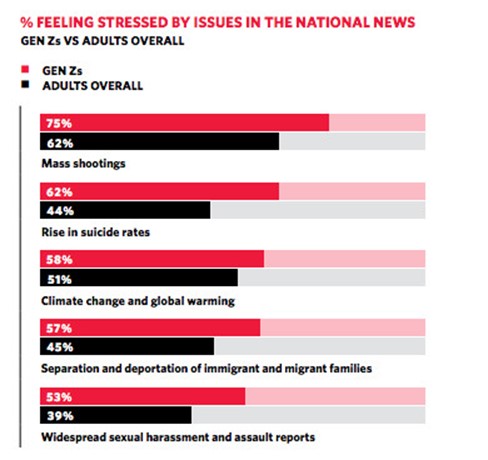
Once again, Vox Media gets the importance of gun violence all wrong. Brian Resneck says, “America’s teens are [right to be] extremely stressed out about school shootings”. No, no, no. Schools are extremely safe places and mass shooters are extremely rare even in America. America has many more gun massacres than any other country (except countries that are immolated in war), so gun massacres are an odd problem for a rich country like America to have, but it is still a very minor problem that is far from the top of the long list of American public health problems. And mass shootings in schools are especially rare. It is especially irrational to worry about them. Each backyard swimming pool is about 100 times more dangerous than the average household gun. Alcohol use is more dangerous and tobacco kills many more people. Driving to school is much more dangerous than mass shooters in school. Suicide is more dangerous than murder for young people. Climate change will undoubtedly have a bigger impact on youth than mass shooters. But young people are more worried about mass shootings than about suicide or climate change (and fear of car accidents, and alcohol doesn’t even make the list at all):

Why do young Americans feel more stressed out about mass shootings than all the other bigger risks? It is partly the media’s fault for sensationalizing dramatic mass shooter incidents which burn vivid images of mass shooter events into the minds of our youth.  The visceral stories and images from mass-shooter events are perfect viral content for the social media that youth are immersed in. But is it also the fault of our schools which force all American students to participate in active-shooter theater in which students are compelled to pretend to be victims in a real mass shooter event in their otherwise safe-feeling classrooms. Those annual role-playing practices help bring the otherwise distant media stories home and makes them part of every student’s personal reality. This is counterproductive because there is zero evidence that it reduces school shootings and it only makes >99% of students more afraid. School-shooter practices help inspire and train the <1% of students who are aspiring school shooters too. They are almost always inspired by other school shooters and have studied previous school shooting events. They envisioned themselves as following in that tradition and school-shooter practices are an opportunity to fantasize.  They trigger future mass shooters who get to participate in an annual passion play which previews how a school hopes to react to a future shooter and it helps them imagine how they could defeat the school’s planned defenses and insert themselves into the pantheon of school-shooter social media legends.

America’s annual school-based mass-shooter rituals are shaping our culture like all our rituals that we commit to repeating regularly. Our all-school graduation rituals are designed to highlight the importance of academic success; our all-school athletic rallies are designed to increase the status of athletic competitions; our all-school Christmas programs are designed to promote the values of Christmas (both secular and/or Christian). The national movement to do school-based mass-shooter rituals seems to have been partly promoted by the weapons industry. When Bluffton University started our annual shooter ritual, we watched a slickly produced video with dramatic music that seemed to be designed to evoke the suspense and tension of a horror movie although it left the suggested blood and violence completely to the imagination rather than displaying it graphically on camera. The video was professionally made by a firm in the private security industry that is trying to make money off of fear of school shootings.

The rising fear among youth shows that our school-based shooting rituals are changing America, but they aren’t leading to greater common values. They make mentally unstable students who are vulnerable to extremism think about and plan violence. The rituals increase the fears of everyone else, but instead of bringing us together, the fears split us farther apart. Irrational fears make the majority of students more interested in promoting gun control, but they make gun-loving students want more trained officials with guns in schools and more interested in buying more guns for self-defense. Since it is making gun control more popular with the majority of students, that will likely be the long-run outcome as they get older and start voting, but in the meantime, it exacerbates the worst problem America has with guns which is anxiety and fear of violence.

America does have a bad gun violence problem compared with all other developed nations (with well over double the problem of any other nation), but as you can see in the map below, gun violence is much worse in many other poor countries even though they have gun control.

Because American media broadcasts so many images of guns around the world, many foreigners are irrationally afraid to visit the US. For example, when I spend a semester in Guatemala last year, several times I met educated, well-to-do Guatemalans who had been afraid to visit America because they feared gun violence. The irony is that gun violence is a MUCH worse problem in Guatemala than in the US, but they have what they consider sensible gun control in Guatemala and they know that America lacks the kind of restrictions that they have, so they imagine that all Americans are walking around openly carrying guns. They imagine that mass shootings could always be a hair-trigger away because they know that America has far more guns per capita than any other nation on earth that that statistic frightens them.

They all said that they were relieved after they visited America and didn’t see any gun violence and they were surprised that they didn’t see very many guns. You actually see many more guns in Guatemala because they have a major crime problem and most businesses in Guatemala city (and schools!) have professional armed guards with machine guns or sawed-off shotguns visibly patrolling during business hours.

Similarly, one of the big problems Bluffton University has had in attracting foreign students is their fear of gun violence in America. America is famous for our gun culture which is like no other country on earth. It is so famous that foreigners even make fun of us about it. Here is a Dutch comedy routine. It is in English because the Dutch are almost universally bilingual and Dutch media knows that they get more advertising revenues by working in English which has a much larger potential global audience.

And here is an Australian comedian. If you like his work, he has several videos about US gun culture:

Below is a British Broadcasting Corporation video of comedian Jim Jefferies. Although he is originally from America, he seems to have made his professional career in Europe rather than in the US given that all of the news about him on the first page of a Google search on his name comes from UK media outlets and he has several other European comedy videos poking fun at American gun culture.

I agree that some common-sense gun control measures would make Americans safer, but if you look at the big picture we are already pretty safe from gun murders. Our murder rate is less than half what it was in the 1990s (most likely due to less lead poisoning). Gun control would save a few more lives, but mostly by reducing the suicide rate and that is a good thing, but for me and most people I know, the best thing about gun control would be that it would reduce our irrational fear of gun violence. For example, with greater gun control, I expect we could have more school rituals celebrating our heroes rather than annually herding all our students, from kindergartners to college students, into silent huddles in darkened classrooms while pretending that heavily-armed mass-murderers are stalking the halls on the other side of the classroom door.

Posted in Violence & Peace

“no other nation has the equivalent of American college sports.”

College football might be in the news because of CTE lawsuits that might end the game, but Saahil Desai at The Atlantic points out other problems with college sports. He argues that college athletics are sucking resources out of our schools, reducing racial diversity, and lowering academic achievement. And if you want into Harvard, athletes get to cut in line.

By the National Collegiate Athletic Association’s own estimate, 61 percent of student athletes last year were white. At elite colleges, that number is even higher: 65 percent in the Ivy League, not including international students, and 79 percent in the Division III New England Small College Athletic Conference, which includes elite liberal-arts colleges… All applicants to Harvard are ranked on a scale of one to six based on their academic qualifications, and athletes who scored a four were accepted at a rate of about 70 percent. Yet the admit rate for nonathletes with the same score was 0.076 percent—nearly 1,000 times lower. Similarly, 83 percent of athletes with a top academic score got an acceptance letter, compared to 16 percent of nonathletes. Legacy admissions policies get a lot of flak for privileging white applicants, but athletes have a much bigger effect on admissions, and make up a much bigger percentage of the class. And it’s not just Harvard—in 2002, James Schulman and former Princeton University President William Bowen looked at 30 selective colleges and found that athletes were given a 48 percent boost in admissions, compared to 25 percent for legacies and 18 percent for racial minorities… Put another way, college sports at elite schools are a quiet sort of affirmative action for affluent white kids… Ivy League sports like sailing, golf, water polo, fencing, and lacrosse aren’t typically staples of urban high schools with big nonwhite populations; they have entrenched reputations as suburban, country-club sports. According to the NCAA, of the 232 Division I sailors last year, none were black. Eighty-five percent of college lacrosse players were white, as well as 90 percent of ice-hockey players. And the cost of playing these sports can be sky high. …46.3 percent of recruited athletes in the class of 2022 hail from families with household incomes of $250,000 or higher, compared to one-third of the class as a whole. …At schools like …Ohio State University …athletics is a cash cow: In 2017, the Ohio State athletics program brought in $167 million in revenue. Yet, according to the NCAA, at all but 20 colleges, athletics programs lose more money than they make…”People are complaining about minority students [getting in with lower academic standards],” Hernandez says, “but athletes are taking up almost a fifth of the class [at Harvard], and they’re lowering the academic standards quite a bit.”

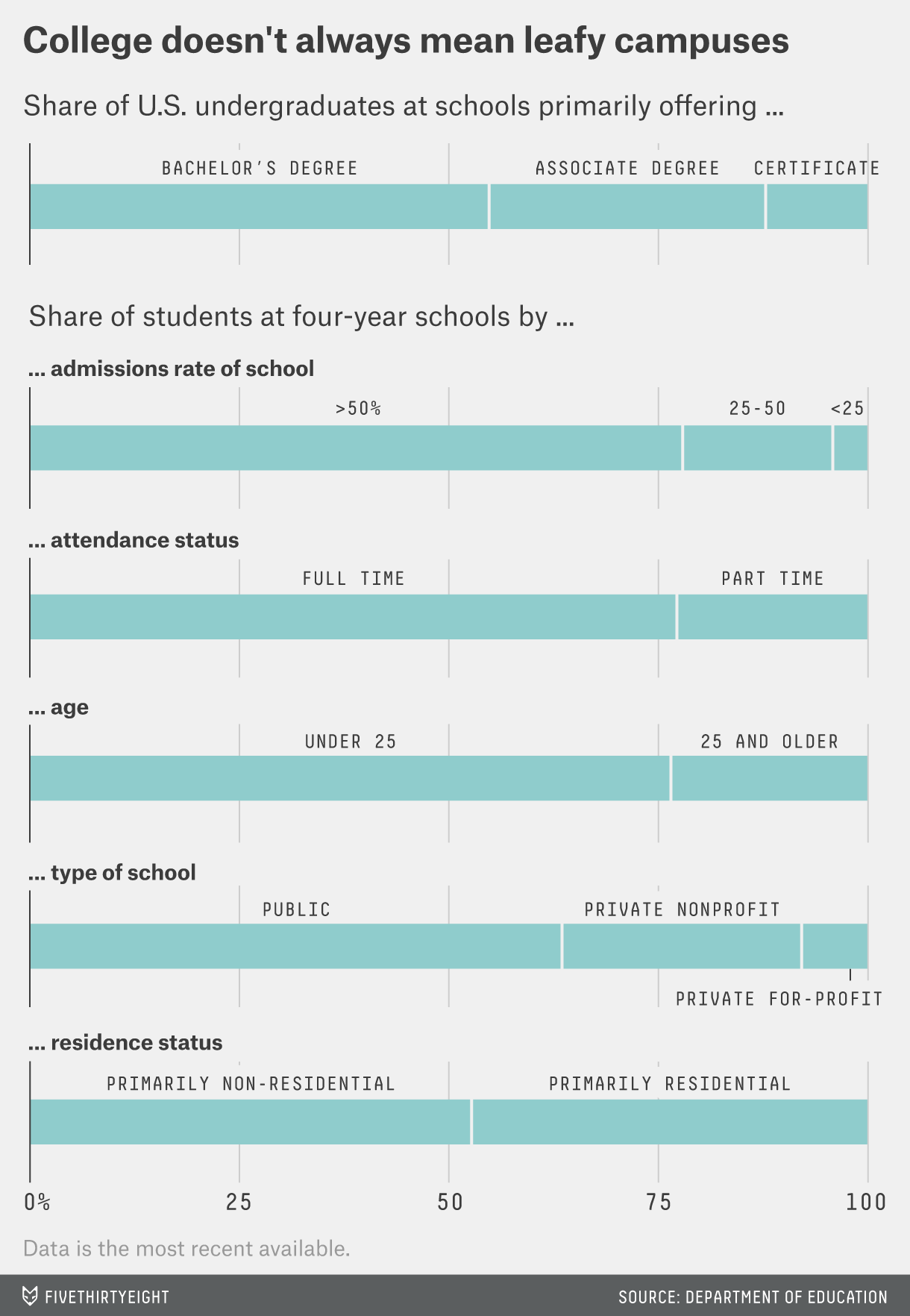
This analysis is overly focused on elite schools because they educate only a tiny fraction of students. Non-selective colleges are much more important.

And elite colleges do an especially terrible job of educating low-income kids. They are almost exclusively for wealthy families, so they probably aren’t nearly as segregated from the rest of society by race as they are by wealth:

That is why you shouldn’t give your money to a highly selective college. I went to Grinnell College and I don’t give them money anymore because although Grinnell is a great place and does a much better job of educating people who need help than most selective colleges, they are much less efficient at it than Bluffton University where I now teach and where I donate most of my educational dollars nowadays. Although Grinnell does a much better job than most elite schools, you probably shouldn’t give money to any of the schools on the following list with high endowments except Berea College because that is the only school on the list that doesn’t specialize in expensively educating kids who disproportionately come from families that earn above the median income.

Institution Endowment value (2014) Full-time enrollment (2015) Endowment value per student
Princeton University

$20,576,361,000

8,013

$2,567,872

Yale University

$23,858,561,000

12,250

$1,947,638

Harvard University

$36,429,256,000

20,568

$1,771,162

Stanford University

$21,466,006,000

15,778

$1,360,502

Pomona College

$2,101,461,000

1,651

$1,272,841

Amherst College

$2,149,202,662

1,795

$1,197,327

Swarthmore College

$1,876,669,000

1,571

$1,194,570

MIT

$12,425,131,000

11,181

$1,111,272

Grinnell College

$1,829,521,000

1,665

$1,098,811

Williams College

$2,143,152,951

2,135

$1,003,819

Cal Tech

$2,118,100,000

2,255

$939,290

Rice University

$5,553,717,000

6,472

$858,114

Wellesley College

$1,834,137,000

2,344

$782,482

Cooper Union

$717,628,100

938

$765,062

Dartmouth College

$4,468,219,698

6,236

$716,520

Berea College

$1,137,222,000

1,592

$714,335

Washington and Lee University

$1,477,923,000

2,169

$681,385

Bowdoin College

$1,216,030,000

1,794

$677,832

University of Notre Dame

$8,189,096,000

12,122

$675,557

Posted in Labor

Monopolistic competition in health care

According to Modern Healthcare magazine, medical ambulances charged between $26,000 and over a half million dollars for each individual flight in North Dakota over the past four years. The prices averaged around $60,000 which is extremely steep given that almost all of the flights were short trips within the state or to the nearest qualified hospital in neighboring states.  That is far more than the normal market price of hiring an equivalent private jet. For example, the average price for a private charter flight all the way across the entire country (from Virginia to Oregon) on a midsize jet was less than half the average cost of a medical taxi (about $30,000). The extra cost of an air ambulance cannot be explained by the paramedic equipment in the jets because the same paramedic equipment is installed on ordinary ambulances on the ground and they charge a small fraction of that price for trips of similar duration.

The reason costs have risen so high according to the article, is a classic case of monopolistic competition. In this kind of market structure, competitors inefficiently invest to expand capacity which increases fixed costs and then they must raise prices to pay for their excessive investment in fixed costs. The result is massive overcapacity and high prices.

“In 1997 there were about 350 helicopters doing this,” he said. “Today there are over 1,100.”…”When … customers paid [a high price], the companies tripled the number of helicopters,” he said, adding that the industry’s ability to spread its fixed costs over a large number of transports is reduced because there are too many transports. “The problem is not that [variable] operating costs have dramatically increased; rather, companies cannot spread those [fixed] costs over a reasonable number of flights,” he said. “The industry then attempts to use this self-inflicted situation as justification for their extravagant billed charges.” Aaron Todd, CEO of the operator Air Methods Corp., acknowledged …that the number of transports may exceed market need. “And if you ask me personally, do we need 900 air medical helicopters to serve this country, I’d say probably not, maybe 500, 600 could do well, but it’s an open market, these are—we don’t have certificate-of-need restrictions,”

Certificate of need restrictions are used in other parts of the healthcare industry to restrict businesses for expanding their capacity (and fixed costs) beyond what regulators think is efficient in order to hold down overall costs. For example, hospitals and nursing homes typically require this kind of permission to expand and build more space for more beds because there is wide variation in the number of hospital beds in different regions of the country and areas with more hospital beds typically have higher expenditures without achieving better results. For example, here is a map from the Dartmouth Index which shows that McAllen and Abilene Texas have about twice as many hospital beds per person than neighboring Austin. (The latter two areas are circled on the map).

Modern Healthcare magazine implies that air ambulances have become corrupt as they compete for business and increase both flights and prices:

…One insurance lobbyist, who characterized the air ambulance market as “the wild West,” complained of the sometimes aggressive ways companies find patients in the limited pool. “I’ve seen air ambulances following the police radio and showing up at the scene of an accident,” the lobbyist said. “They have all sorts of tactics to get called.” Analysis of one company’s data shows the number of medical air transports per base has declined as those bases have proliferated. According to numbers gleaned from past annual reports by Air Methods Corp… 69 bases sent out about 39 transports each per month in 2005. In 2013, 179 bases each sent out about 25 transports per month. The company’s annual number of total transports during that period increased from nearly 32,000 to just over 53,000. Rising operational costs for the air transport companies were the result of business decisions, the consultant said. “No one forced it; they just did it by themselves.” He also said transport services develop relationships with the providers who dispatch patients from one facility to another for care. About 80% of transports send a patient from one facility to another, rather than airlifting a person from the scene of an accident. Even if they don’t have a referral relationship with the air transport company, the consultant added, hospitals don’t necessarily watch out for the patients’ wallets since it isn’t their money.
“Again, you don’t have a market where buyers or sellers are agreeing to buy some quality or quantity,” he said. “None of this is a market situation.”

Unfortunately economics classes typically focus on the simplest type of market, “perfect competition,” because that is the simplest analysis to teach and perhaps because it is the most beautiful market because it is “perfect” market, so people who study markets are naturally drawn to it. But no markets are really perfect. All markets stray from perfection to various degrees and a better description of most real-world markets is a more complex model called monopolistic competition. The main difference is that in this model, competitors differentiate their products so that they aren’t selling perfect substitutes with numerous other competitors. That allows each firm to raise prices above their marginal costs, and it also encourages excessive investment in fixed costs which raises overall costs and results in inefficient scale (excessive capacity).

This describes the air ambulance market well. There is no price competition for any customer because whoever shows up first gets each customer (or for 80% of flights, it is whoever the hospital calls) and without price competition, the businesses keep raising their prices and the high prices encourage businesses to build more bases and keep too many air ambulances always ready to fly. That means excessive overcapacity and the need to raise prices to cover the fixed costs of maintaining so many bases and jets and crews that mostly sit idle waiting for a call.

Unfortunately those high costs are increasingly not fully covered by health insurance. Modern Healthcare magazine gives a typical example:

Last November, a fully insured North Dakotan was dispatched on an 84-mile medical air transport from Langdon, N.D., to Grand Forks. When the charges came in at more than $66,000, …insurance covered just $16,000. The patient was left with a $50,000 bill.

Because of these flights, which patients cannot always choose because they are sometimes unconscious after an accident, some North Dakotans have had liens placed on homes and others have gone bankrupt.

Another inefficiency of monopolistic competition is excessive fixed costs for product differentiation–advertising and marketing.  Rather than competing head-to-head over cost-efficient quality, companies avoid direct competition by selling the idea that their product is totally different from the competition.

A classic example is General Motors’ innovation in competing with Ford based on the color and style of their cars rather than on the quality and cost per mile because Ford had better quality and cost.  General Motors manufactured demand for cars as a status symbol and introduced psychological obsolescence to differentiate each new model year from competition from the used cars sold in previous years.

Whereas there is less of this kind of wasteful consumerism in the healthcare industry than in fashion-oriented production, it is a bigger problem in for-profit-oriented systems like the US than other rich nations that are more nonprofit in orientation.  For example, the US is the only nation in the world except for tiny New Zealand that allows wasteful advertising of prescription pharmaceuticals to consumers.

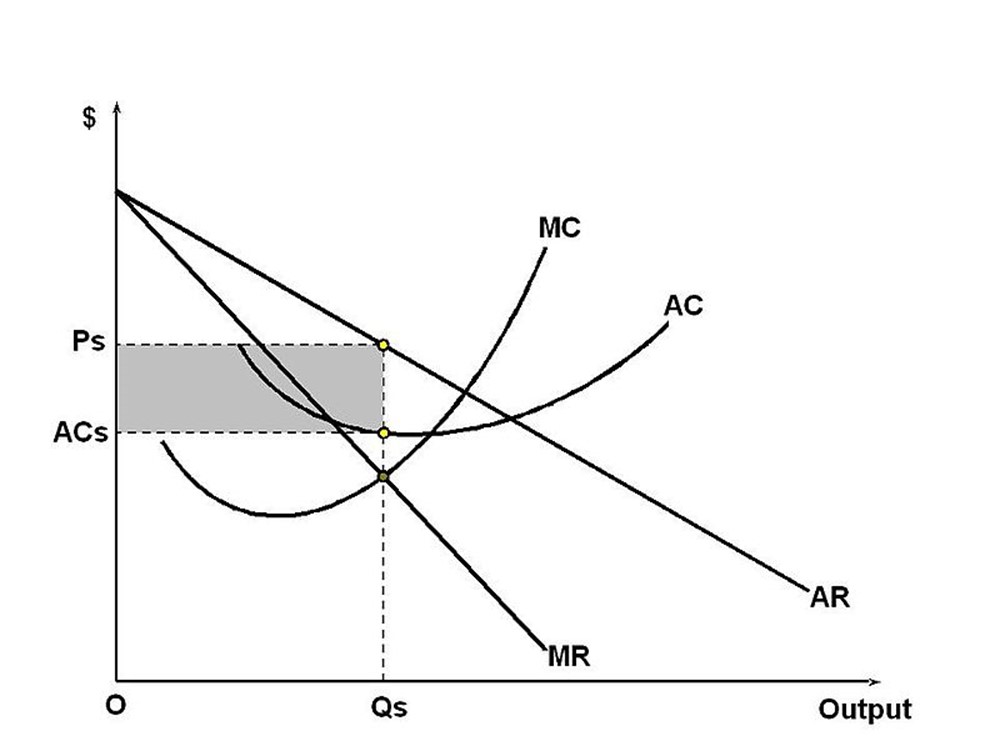
There are similar problems in higher education and in other parts of the economy too, but I’ll save that for another essay. For now, I’ll just end with a graphical analysis of monopolistic competition.

With complexity like that, it is easy to see why economics professors tend to just focus on the simpler analysis of markets in perfect competition. And this graph just shows a static, short-run analysis. It gets even more complicated if you delve into more realism.

Posted in Health, Public Finance

Criminalizing drugs makes about as much sense as criminalizing depression.

Which has a greater cost to society, depression or addiction? The estimated burden on America is similar. The White House reported in 2014:

The economic cost of drug abuse in the US was estimated at $193 billion in 2007, the last available estimate. This value represents both the use of resources to address health and crime consequences as well as the loss of potential productivity from disability, premature death, and withdrawal from the legitimate workforce.

That is pretty similar to the economic cost of depression which was estimated at $210 billion per year in 2014. Plus, depression is what drives many people into drug abuse, so there is considerably overlap. Given that depression causes many of the same problems as illegal drug abuse, and Americans tried to solve drug abuse (a mental illness) by sending drug abusers to jail, why hasn’t anyone proposed sending people to jail for depression? It makes about as much sense.

I’m not interesting in legalizing drugs, but why not treat drug use more like other nonviolent crimes like tax evasion and embezzling?  Whereas drug abuse is as close as you can get to a ‘victimless crime’ that doesn’t directly hurt anyone but the drug user himself, white-collar crimes are never victimless.  They involve stealing from innocent victims and really should be punished more harshly than drug abuse.

We should just fine people for being involved in illegal drugs rather than jailing them. That would prevent a corporate-run drug pushing industry (unlike full legalization) and make it easier to treat people who are abusing drugs. It would be more effective for social workers and public health professionals to address America’s drug problem rather than police officers. Now Ohio has a ballot initiative which gives a chance to move in this direction. German Lopez has an excellent explanation.

First, he explains that imprisoning drug addicts doesn’t have much more effect than fining them.

Research has long indicated that the severity of punishment has very little effect on someone’s willingness to commit a crime or use drugs. For example, a 2014 study from Peter Reuter at the University of Maryland and Harold Pollack at the University of Chicago found there’s no good evidence that tougher punishments or harsher supply elimination efforts do a better job of driving down access to drugs and substance misuse than lighter penalties.

So it doesn’t matter so much if people are punished harshly (through, say, a felony) than whether they’re punished more leniently (through, say, a misdemeanor).

In Ohio, critics of Issue 1 have pointed to another concern: that reducing drug offenses from felonies to misdemeanors will make it harder to get people into addiction treatment. As it stands, drug courts use the threat of criminal punishment — and prison in particular — to get drug offenders to agree to addiction treatment. If that threat is removed, then judges will be less able to push people into treatment. Critics point to California’s example, where drug court participation in some areas has dropped in the aftermath of Proposition 47.

But supporters of Issue 1 argue that the savings produced by the initiative — which will be largely put into addiction treatment — will actually lead to more access to treatment, not less.

…this is a particularly pertinent issue in Ohio, because it’s one of the states hit hardest by the opioid epidemic.

In the international arena, there’s a good basis for what Issue 1 supporters are arguing here: Portugal. In 2001, Portugal decriminalized all drugs and dramatically ramped up treatment… In the ensuing years, Portugal saw drops in drug-related deaths and reported past-year and past-month drug use, although some increases in lifetime prevalence of drug use and an uptick in reported drug use among teens after 2007, according to a 2014 report from the Transform Drug Policy Foundation.

Ohio is not going as far as Portugal. It’s not fully decriminalizing drugs, since drug possession offenses will remain misdemeanors. And it’s not dedicating anywhere as many resources to addiction treatment as Portugal did. But Issue 1 is in some ways a downscaled version of the Portuguese approach, so some lessons can be drawn — and they suggest that the critics of Issue 1 are buying into hyperbole.

As Jessie Balmert put it for the Cincinnati Enquirer, “Some say [Issue 1] will destroy the state. Others claim it will cure Ohio’s drug problem. Neither is true.”

Unfortunately, Issue 1 is only a very small step towards reducing the wildly high US incarceration rate which is tremendously high:

According to the World Prison Brief, the US incarceration rate is 655 per 100,000 people. That’s higher than any other country in the world, including authoritarian nations like Russia (402) and China (118). It’s higher than comparable developed nations like Canada (114), Germany (75), and Japan (41), which have similar levels of crime — or lower, particularly when it comes to murder …compared to America.

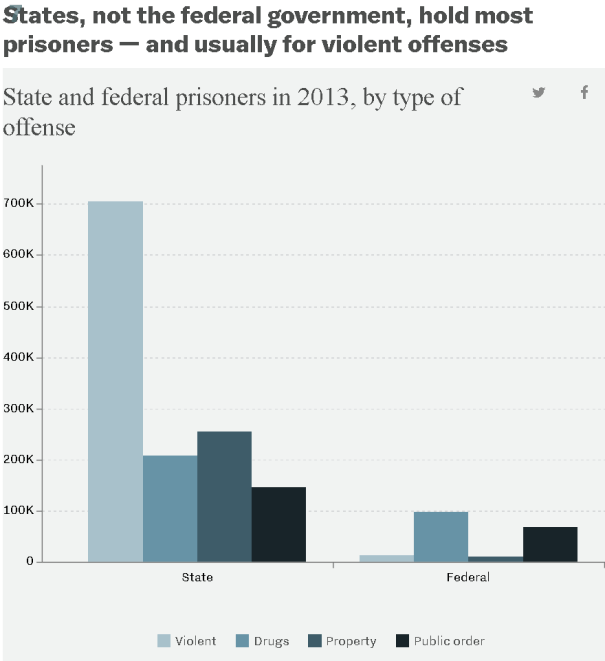
Issue 1 mainly deals with drug incarceration which is only a small fraction of total incarceration.  It is a myth that nonviolent drug crimes result in a majority of American prison sentences.  The reality is probably less than 15%.  That is still too many, but it isn’t the main reason why America’s prison population is out of control.  The myth comes from the fact that the majority of inmates in FEDERAL prisons are there for nonviolent drug crimes, but that is a minority of total incarceration as the following graph demonstrates because most prisoners are in state and local prisons.  See the entire article this graph comes from for a lot more information about the state of mass incarceration.

German again:

Over the past few years, there has been a powerful narrative told about mass incarceration, through books like Michelle Alexander’s The New Jim Crow, suggesting that America’s war on drugs has been the primary driver of mass incarceration.

This isn’t right. The latest data from the US Bureau of Justice Statistics shows that in state prisons, where about 87 percent of US inmates are held, nearly 55 percent are in for violent offenses (such as murder, manslaughter, robbery, assault, and rape), while only a little more than 15 percent are in for drug offenses.

These figures are at best a minimum for the number of violent offenders in prison. It’s not rare for violent offenders to plea down their charges to nonviolent crimes; …So at least some of the supposedly nonviolent offenders have likely committed violent crimes.

So if the US is to significantly reduce prison populations, it’s going to have to address non-drug crimes. For example, the criminal justice advocacy group #cut50 aims to reduce the prison population by 50 percent. This is going to be simply impossible if the focus is only on drug crimes, given that only around 15 percent of people in state prisons are in for drug offenses.

And even if the US reduced its prison population by 50 percent, its resulting incarceration rate of around 300 per 100,000 people would still dwarf countries like Canada, Germany, and Japan, none of which have incarceration rates above 120.

Ohio Issue 1 makes some progress in non-drug areas by allowing sentencing reductions up to 25 percent for other offenses.

As Mark Kleiman told Lopez,

We did the experiment. In 1980, we had about 15,000 people behind bars for drug dealing. And now we have about 450,000 people behind bars for drug dealing. And the prices of all major drugs are down dramatically. So if the question is do longer sentences lead to a higher drug price and therefore less drug consumption, the answer is no.

Higher penalties (incarceration) for drugs doesn’t work much better than low-stakes penalties like a combination of fines, probation, and community service because most people don’t know what the exact penalty is anyhow.  Do you know what penalties your state laws impose? Most people just know drugs are illegal and this “decriminalization” proposal keeps them illegal. Secondly, the chance of getting caught with drugs is not as big as you might think.  We don’t know the chances of drug dealers getting caught, but even for our highest-priority crimes, murders, about 1/3 are never resolved.  Drug crimes are much harder to detect than murders because neither the customer nor the dealer wants to be caught and nobody is helping the police find the crimes whereas everyone wants to help the police catch murderers except the murderers.  Thirdly, we are mostly talking about how much our punishments might influence addicts who we don’t normally expect to make the wisest cost-benefit planning in their lives.  Do you really expect them to dramatically change their behavior merely because jail time is worse than a big fine?  The evidence shows that they don’t care much.

So I’m going to vote in favor of Issue 1 this November.  It won’t cause a big change, and probably 99% of Ohioans won’t notice any difference, but it seems like a big step in the right direction for the <1% who are involved with these issues in the criminal justice system.  I have a lot of friends and people I respect who oppose it, but I’m not persuaded by their reasoning so far.

For example, the Cleveland Plain Dealer editorial board opposes the issue, but their explanation of what it does makes it look pretty good to me. Their main argument against it is that although it is a good policy, it is kludgy to implement the policy with a constitutional amendment rather than ordinary legislation.  But that isn’t a good reason to oppose it because we don’t have a choice between those two different ways to implement this policy–the legislature isn’t going to do it.  And states change their constitutions all the time so it really isn’t a big deal.  We shouldn’t think of the constitution as being sacrosanct.  The typical state has completely re-written its constitution from scratch more than three times on average (a total of 235 state constitutional conventions so far).  This is just an amendment and state constitutional amendments are constantly being passed somewhere in America. It isn’t a big deal to amend a state constitution and we can always amend it again if it doesn’t work out perfectly as written.

Posted in Health, Public Finance

(OLD) Marijuana decriminalization vs legalization

See updated post here!

Posted in Health, Labor

Failures of Obamacare and possible reforms

Jon Walker wrote a wonderful critique of Obamacare that Kevin Drum published in pieces so I’m copying it below so that it is all in one place.

1. State control combined with zero direct incentives for the states to make it work

The ACA left much of the regulation of the individual market and the implementation of the exchanges to the states, but it gave states no incentive to perform these tasks well. State/federal partnerships are common and there is nothing inherently wrong with them, but they almost always offer strong incentives for states to use good oversight. For example, with Medicaid, states are responsible for paying a portion of their costs, so they have a strong incentive to keep Medicaid costs low. The ACA should have given total control to the federal government or given states financial incentives for keeping premiums low, but lawmakers chose the worst of all policy designs. There was zero political justification for this design mistake.

2. Punishes low income people if their state or county tries to make the ACA work

Even worse, the law actively punishes low-income people in states and counties which try to make the exchanges function well. ACA’s tax credits for the poor are based on the price of the second-lowest-cost silver plan, which means that regions with higher prices also provide higher subsidies. Perversely, it turns out that badly managed ACA plans produce premiums so high that the tax subsidies rise even higher—which produces a lower net cost for anyone who qualifies for subsidies. Conversely, in well-managed states like California, the net cost of a bronze or silver plan tends to be fairly steep.
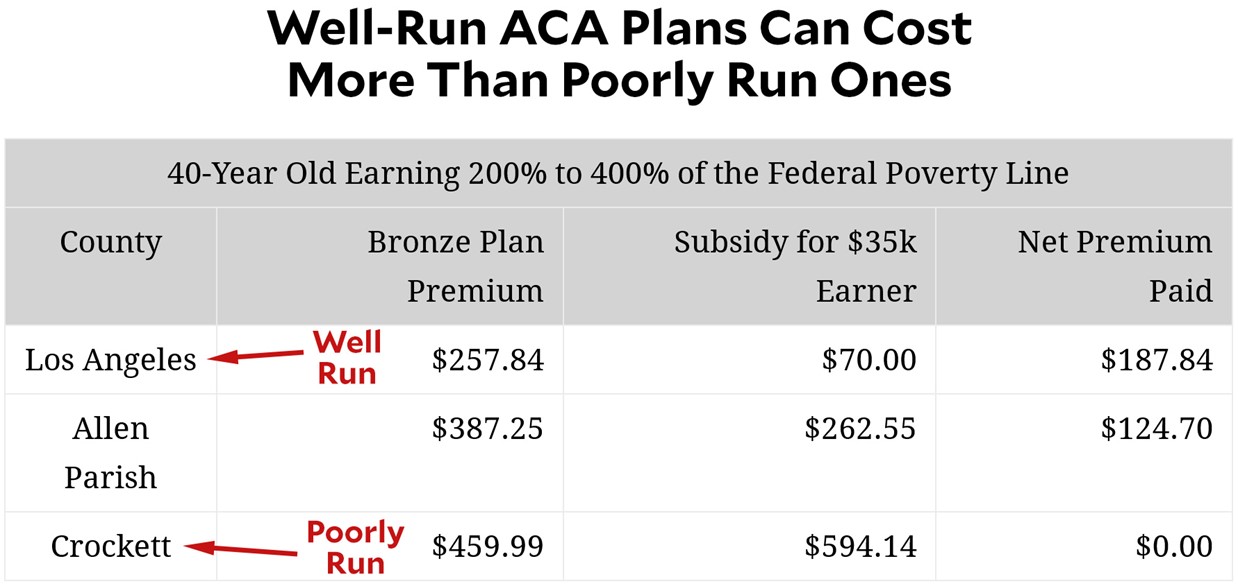
3. Heavily encourages development of local monopolies

In any market there is already a strong incentive for companies to try to develop local monopolies, but the ACA design supercharges this with its subsidies based on the second-lowest-cost silver plan. The low-cost insurer in a market can game this design by offering two low-cost silver plans, thus making it nearly impossible for anyone else to compete. California adopted plan standardization rules to reduce this problem and make shopping for plans easier. The Obama administration could have adopted similar rules for Healthcare.gov but chose not to. This is often worst in rural places where there are concentrated hospital markets, making it impossible for any but the largest insurer to negotiate decent rates, or markets where the dominant hospital network is the insurer. Of course, once an insurer has created a monopoly position, it can then use it to create a potentially massive windfall. The ACA was premised on the idea that more insurance competition should be a top goal, but its design encourages the opposite.

4. Designed to get worse [less affordable] over time

The exchange plans and subsidies are based off actuarial value (AV). An actuarial value of 70% means the average person pays 30% of health care costs and the insurer pays 70%. The problem is that if health care costs rise faster than inflation, consumers end up paying the price. If health care spending averages $10,000 per person, cost sharing is $3,000. But if premiums go up to $20,000, then cost sharing goes up to $6,000. Even if you believe that the subsidy structure of the ACA was sufficient to make care “affordable” for people with specific income levels at the time of its passage, the design assures it will slowly make care unaffordable over time. What’s worse, ACA’s design includes a “failsafe” mechanism that will reduce subsidies if demand for insurance ever gets high enough—as it’s likely to do during a recession. Cutting help during a recession is a terrible policy move.

5. Accidently drove young, healthy people off the exchange

The ACA allows insurers to charge older people as much as three times more than young people pay in premiums; this is called a 3:1 age band. Compared to requiring insurers to charge everyone the same price, this added some real administrative complexity, but it was done to prevent premiums for older customers from getting too high. This inevitably means that premiums for younger people will be higher than they would be otherwise, but this at least was expected. What wasn’t expected is that young people might end up actually paying more for health insurance than older people. However, thanks to the subsidy design, it’s often the case that the net cost of insurance is more for the young than for the old. At the same time, if your income is high enough that you don’t qualify for subsidies, then it’s old people who pay more. This is a perfect example of people designing complex policies without even understanding how they work together. Regardless of whether you think the young or the old should pay more, it ought to be the same regardless of income level.

6. Created a massive negative marginal tax rate

The ACA has a massive subsidy cliff, particularly for older people, which means if an individual earns a dollar over the subsidy threshold, they end up losing thousands. This cliff problem will only get worse as premiums continue to rise. Even without increasing overall spending it would have been possible to smooth out the subsidies to at least remove this massive negative marginal tax rate problem.

7. The creation and promotion of silver plans, when no one should buy middle level insurance

The ACA exchanges offer Bronze through Platinum plans, which makes Silver a middle-level option in terms of cost-sharing. The problem here is that most people have a pretty good idea of whether they’re likely to be high-cost or low-cost patients in a given year. Rationally, high-cost patients should choose Platinum plans and low-cost patients should choose Bronze plans, but the ACA subsidies are designed to force insurers to offer Silver plans—and they all but force many people to buy Silver plans. Most people should only be choosing the highest or lowest cost sharing option depending on their expected health, never the middle option.

Note that this problem gets worse the higher premiums go because the gap between Silver and Bronze also goes up. People who already pay the most are the ones who are hit hardest by the bias of the ACA toward pushing everyone toward Silver plans.
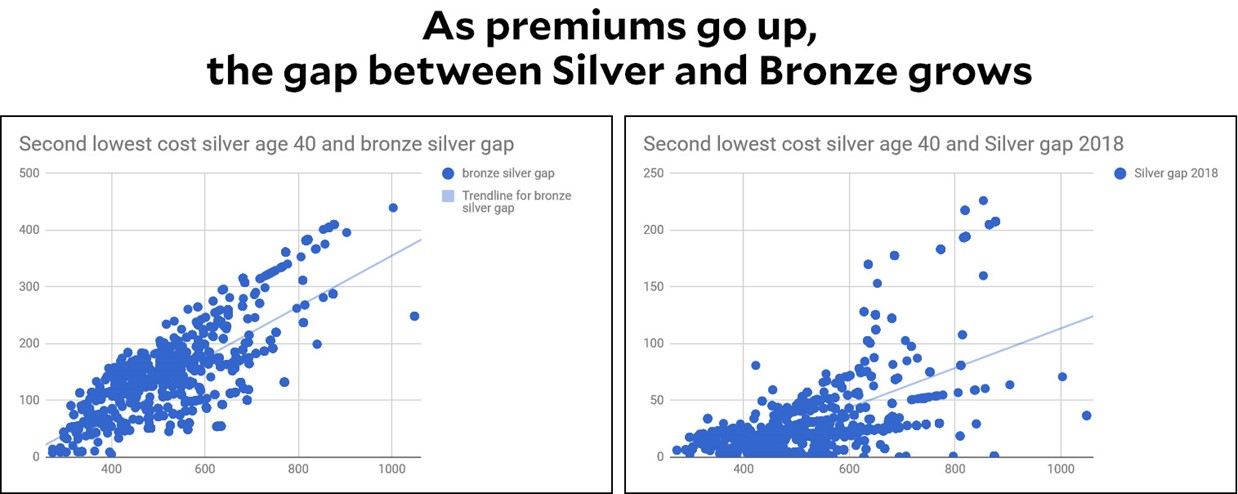
8. A needlessly complex mess of plans

In addition to the four metal tiers, the ACA requires plans to offer Cost Sharing Reductions to some lower income people but only if they buy Silver plans. These CSRs turn Silver plans into effective 94% AV, 87% AV, or 73% AV plans. That is seven different insurance tiers for every insurer, with numerous plans within each tier. It is a confusing administrative mess that also makes it difficult to explain to people why buying a Silver plan is way better than a Gold plan. These multiple subsidies could have been simplified, and these extra saving Silver plans could have just been merged with a “platinum” tier.

9. Terrible public data makes smart shopping impossible

The idea of the ACA was to bring down costs by getting individuals to be better, more conscientious consumers of their health care. This idea can’t even work in theory unless an individual has good data. However, the ACA has done a very poor job of providing people with the critical network data they need. Combined with the needlessly large variety of insurance plan designs, it is unreasonable to expect people to make the best choice.

10. Lets employers punish their sick employees

One part of the ACA allowed employers to charge employees significantly more if they don’t take part in “wellness programs.” These programs offer dubious value when it comes to improving health but have serious privacy and social justice issues. This effort, meant to help encourage sick people get healthy, has likely turned into a way for companies to discriminate against and financially punish those most in need.

Of course, another huge problem with Obamacare is that it doesn’t even achieve universal health insurance.

Most of the above problems could be avoided by repealing Obamacare and replacing it with Medicare for All. But the biggest problem with both Obamacare and Medicare is the biggest reason why American healthcare is so ridiculously expensive. The prices are just too damn high. Medicare for All would help reduce prices more than Obamacare, but it could go farther if we would follow these four ideas from Matt Yglesias that neither Republicans nor Democrats have touched:

1) Let in more immigrant doctors

American doctors earn substantially higher incomes than doctors in foreign countries, which means that foreign doctors could raise their incomes by moving to the United States. Conversely, American patients could save money by being treated by immigrant doctors.
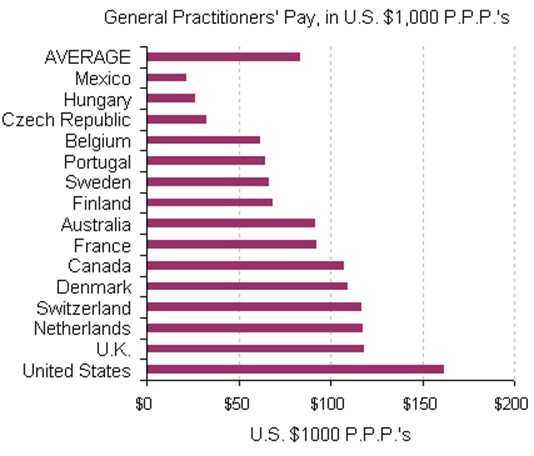
…despite high wages, the United States has a relatively small number of doctors per capita.
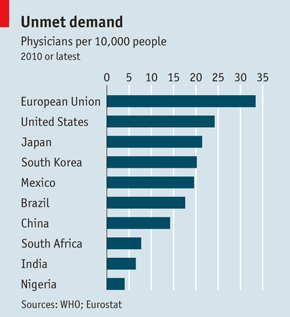
… foreign-born doctors face a great deal of difficulty in obtaining a license to practice medicine in the United States even as studies show that patient outcomes for Americans treated by immigrant doctors are just as good as those treated by native-born doctors. … Many foreign countries appear to have a comparative advantage in affordable medical education, and it would serve the interests of both the United States and those countries to have a clear pathway in place by which foreigners could be trained to work as doctors in the United States.

2) Curtail pharmaceutical monopolies [by funding prizes instead of awarding patents]

…Sarah Kliff recently wrote about a Hepatitis C treatment that costs $1,000 per pill. And yet [these] pills are not expensive to manufacture. Costly medications are expensive primarily by design. …the United States Congress has seen fit to create financial incentives for medical innovation by granting pharmaceutical companies monopolies known as patents that shield new drugs from market competition for years.

This leads to …windfall profits for drug companies. Those profits become the financial engine that makes new research worthwhile.

But patents also make innovation harder in some respects by making it more costly for new researchers to build on previous work. What’s more, they are hardly the only possible means of financing new research. Economists ranging from George Mason University’s Alex Tabarrok to Joseph Stiglitz have proposed moving away from medical patents to taxpayer financed prizes for key breakthroughs.

A large cash prize creates an incentive to innovate just as much as a patent does, but offers several important advantages. First, nobody needs to be priced out. All those $1000 hepatitis pills generate a lot of revenue, but also a lot of patients who end up with no pills at all. With a prize, the money is raised in a way that doesn’t need to exclude anyone. Prizes can also direct R&D efforts at problems that are genuinely important, rather than ones that happen to interest a large market. The patent system is better at generating treatments for conditions that annoy rich people (baldness) than conditions that kill poor people (malaria).

Last but by no means least, a prize-based system would reduce the amount of money and effort firms currently spend on trying to game the patent system. Right now, for example, companies like AstraZeneca spend time doing things like reformulating the active ingredient from Prilosec into a quasi-new drug called Nexium in order to get a new high-margin product to sell. Prizes could be targeted at innovations with real health benefits, rather than …payoffs for hacking patent law.

3) Let non-doctors treat patients

In some states, licensed nurse-practitioners are allowed to provide basic medical treatment within their sphere of competency without oversight from a doctor. In [most states] this is illegal. But the state-to-state variation allows us to compare the quality of care provided by NPs to that provided by MDs, and it shows that NPs are just as good on objective outcome measures, and better on subjective accounts of patient satisfaction.

If [all] states acted in line with Institute of Medicine recommendations and let their NPs practice autonomously, patients could get the cheaper health care they provide. Studies of Certified Nurse Midwives and Certified Registered Nurse Anesthesiologists have, …found that they treat patients as well or better than physicians.

These various categories of advanced practice nurses receive training and education that is not as time-consuming and expensive as the training provided to doctors. Consequently, their services — where legal — can be obtained more cheaply than those of doctors. Relying more heavily on advanced practice nurses would save money directly through this channel. It would also leave doctors with more time on their hands to treat patients who really do need to see a doctor, bringing more supply and lower prices to those cases.

A similar dynamic obtains in the field of dentistry. Most years the vast majority of people need no dental care beyond basic tooth cleaning that a dental hygienist can provide. But in many states it is illegal for a hygienist to practice without the direct supervision of a dentist [who have monopoly power over hygienists to raise prices and get a healthy cut out of hygienist fees for] routine tooth cleaning…

4) All-payer rate setting

In [most countries with universal healthcare such as] Germany, the Netherlands, and the exotic foreign land known as Maryland they practice what’s called all-payer rate setting. That means that instead of each insurance company negotiating separately with each hospital group on prices, a government commission sets a price that everyone pays. And it works. Maryland has curtailed cost growth without inducing any noteworthy shortages of health care facilities:
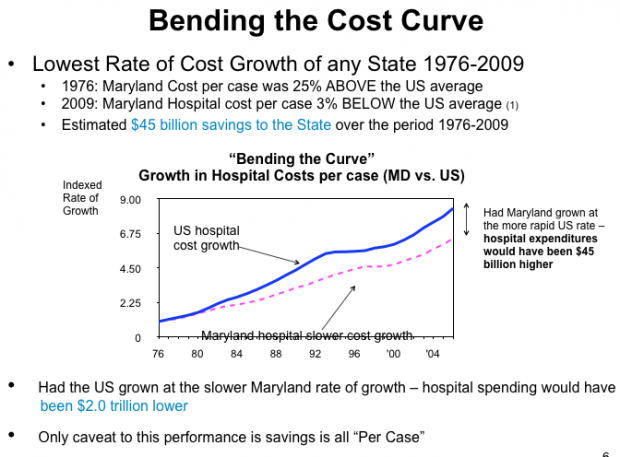
Another advantage to all-payer rate setting beyond the simple ability to set low rates is that it would eliminate some of the necessity of doing everything through an insurance company middleman. Right now, one of the services your health insurer provides is a real insurance function that helps you hedge against risk. But for many people, the insurer’s most important practical role is as a [price] negotiator. Since the insurance company has a lot of scale, it can get a good price from a doctor or a hospital. An uninsured person would have to pay at a much higher rate.

[Eliminating] the insurance company’s role as a negotiator would [reduce administrative costs and] let insurers focus more on the insurance function… And by eliminating some of the advantages to sheer scale on the insurance side, it could also promote more competition in the health insurance industry.

Medicare for All is essentially a more extreme version of all-payer rate setting because Medicare would set the same rates for all payers. Ezra Klein wrote about a much less radical way to bring prices down by capping the maximum prices at a higher level than a typical all-payer rate. This would be much less radical than either Medicare for All or even all-payer rate setting.

Explaining why Americans pay so much more for health care than anyone else is really quite easy: Americans are charged higher prices for health care than anyone else [in the world].

Here are 15 charts proving the point… Cruelly, the uninsured are often charged the highest prices, because if you’re too poor to afford insurance, you’re also too poor to fight back against price gouging…. None of this makes even a little bit of sense. But Medicare could help fix it.

…In Health Affairs, Jonathan Skinner, Elliot Fisher and James Weinstein note data from Castlight Health showing that the price tag on one particular cholesterol test can range from $15 to $343 — and that’s just within the city of Dallas, Texas…

these prices are rarely, if ever, published, and often they’re not even the actual price people pay. If markets are going to work well, both buyers and sellers need a lot of information about how much things cost and how good they are. In health care, buyers are denied basically all of that information, and they’re occasionally unconscious when the transaction is being handled. This is not what a functioning market looks like.

But there are exceptions to America’s used-car dealership of a health-care system. One of them is Medicare. The way Medicare works — which is the way the health systems in pretty much every other country work — is that it tells hospitals and doctors what it’s willing to pay for various services and then they decide whether to accept Medicare or reject it. It’s a take-it-or-leave-it offer. Almost all of them take it. More than 90 percent of doctors accepted new Medicare patients in 2012 — a higher number, even, than accepted new patients on private insurance. The result is that Medicare beneficiaries pay much lower, and much more predictable, prices than people with private insurance.

… Skinner, Fisher, and Weinstein… suggest a simpler solution: why not cap all prices at 125 percent what Medicare pays?

The federal Medicare program has in place a complete system of prices for every procedure and treatment. It’s not perfect, but it is uniform across regions, with a cost-of-living adjustment that pays more in expensive cities and less in rural areas. If every patient and every insurance company always had the option of paying 125 percent of the Medicare price for any service, we would effectively cap the worst of the price spikes. No longer would the tourist checked out at the ER for heat stroke be clobbered with a sky-high bill. Nor would the uninsured single mother be charged 10 times the best price for her child’s asthma care. This is not just another government regulation, but instead a protection plan that shields consumers from excessive market power.

…why not just give [the same prices Medicare pays] to private insurers, too?

Well, one answer [why private insurers should start out being billed 25% more] is that the entire health-care system is organized around being able to charge these high prices. If everyone switched to paying Medicare rates overnight, you would see a wave of hospitals closing and device manufacturers going bankrupt. The system can’t take that much change, that fast.

…This …brings the variation in prices down. This is a plan to help the people who end up getting truly gouged — it will mean an end, for instance, to uninsured patients being charged 300 percent of what Medicare pays for an appendectomy.

The health industry would freak out, of course, because once prices are capped at 125 percent of Medicare’s rates, they know it’s a small step …towards All Payer Rate Setting — which is, more or less, a way of merging the savings of single-payer system with a lot of private insurers.

Posted in Health

Enter your email address to follow this blog and receive notifications of new posts by email.

Join 75 other subscribers
Blog Archive
Pages